Shakshuka Recipe | The Ultimate All in One Breakfast
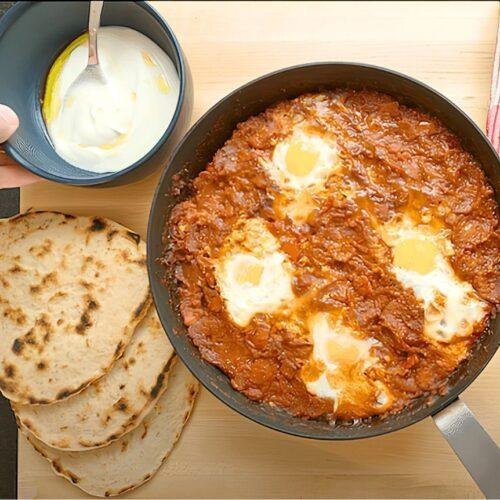
A shakshuka recipe with a few twists for autumn: diced potatoes fried in a homemade pilpelchuma, a chilli and garlic paste from Tripoli in Libya, with sweet red peppers and tomatoes. The eggs cook in wells in the sauce until the whites are set and the yolks are still runny. Serve it from the pan with pitta or flatbread and thick natural yoghurt.
Equipment
- Blender (jug, liquidiser)
- Food processor
- Stick blender
- Dish / Ramekin
- High-sided container
- Mixing bowl / Bowl
- Kettle
- Chef's knife
- Chopping board
- Digital scales
- Measuring spoons
- Frying pan
- Non-stick frying pan
- Spoon (table, dessert, tea)
Ingredients
- 2 x Tablespoons olive oil
- 2 x Potatoes 430g / 15.2oz
- 80 g / 2.8oz Pilpelchuma or harissa more or less depending on how spicy you want it
- 2 x Teaspoons tomato puree
- 2 x Red bell peppers 300g / 10.6oz
- 7 x Roma tomatoes 750g / 26.5oz canned is a great option as well.
- 4 x Eggs
- PILPELCHUMA
- 2 x Ancho Chillies 20g / 0.7oz
- 90 g / 3.2oz peeled garlic
- 2 x Teaspoons caraway seeds
- 3 x Teaspoons ground cumin
- 5 x Teaspoons cayenne pepper
- 5 x Teaspoons sweet paprika
- 80 g / 2.8oz Neutral tasting oil grapeseed, peanut, avocado etc
Instructions
- Begin by making the pilpelchuma (chilli and garlic paste) by soaking two medium-sized dried ancho chillies in boiling water for around 30 minutes. Use any other dried or fresh chilli if you can't get anchos.
- Peel 90 grams (3.2 ounces) of garlic.
- Squeeze any excess water out of the soaked chillies, remove the stems and any seeds, and chop them into a small dice. Add them to a food processor with the peeled garlic.
- Heat a dry pan over a medium-high heat for 2 minutes. Add 2 teaspoons of caraway seeds and toast for 1 to 2 minutes, moving them regularly, until they start to pop.
- Turn the pan down to a low heat and add 3 teaspoons of ground cumin, 5 teaspoons of cayenne pepper and 5 teaspoons of sweet paprika. Stir constantly and toast for 2 minutes, no more, as ground spices burn easily.
- Add the hot spices to the food processor with the chilli and garlic and blend to a thick paste.
- Add 80 grams (2.8 ounces) of neutral-tasting oil and blend again for about 30 seconds until incorporated. The flavour keeps developing for 24 hours, so make it a day ahead if you can. It stains, so keep it off light wooden boards.
- Dice 2 potatoes, skins on, into roughly 1 cm (1/3 inch) cubes. Roughly dice the red peppers (about 5 mm) and the Roma tomatoes.
- Heat 2 tablespoons of extra virgin olive oil in a 28 cm (11 inch) non-stick frying pan over a medium-high heat. Add the potatoes and a pinch of salt and fry for a couple of minutes, tossing. Turn the heat to low and cook gently for about 5 minutes, tossing now and then, without colouring them.
- Add about half of your pilpelchuma (or harissa) and 2 teaspoons of tomato puree. Keep the heat low and stir well so the potatoes are coated, then cook for about 3 minutes, stirring regularly.
- Add the diced red peppers and cook for 2 to 3 minutes more, stirring regularly, until slightly softened.
- Add the diced tomatoes and a pinch of salt. Add a shot of water, cover with a lid and cook for about 30 minutes (as little as 15 with tinned tomatoes), stirring occasionally, until the tomatoes have broken down and the potatoes are soft.
- Check the consistency and seasoning. You want a little liquid: add a shot or two of water if it is too dry, or cook with the lid off for a few minutes if it is too wet. Add a little more salt if needed, and a pinch of sugar if the flavours are underwhelming.
- Crack the 4 eggs into small dishes. With the pan on a gentle simmer, make a well, slide in the first egg, then remake the next well and repeat for all four eggs.
- Season the eggs with a little salt and cook uncovered at a gentle simmer for at least 10 minutes. After about 12 minutes the whites should have mostly set and the yolks should still be very runny.
- For runny yolks, turn the pan off and leave it for 2 to 4 minutes to finish cooking the eggs.
- Serve straight from the pan in the middle of the table with pitta or flatbreads and a side of thick natural yoghurt.
- To store leftover pilpelchuma, press it into a sterilised glass jar with a clean spoon, removing as much air as you can, and pour a little oil over the top to seal it. It keeps in the fridge for about a month.
Video
Nutrition
Serving: 1servingCalories: 378kcalCarbohydrates: 40gProtein: 13.3gFat: 20.3gSaturated Fat: 3.8gCholesterol: 190mgSodium: 188mgPotassium: 1311mgFiber: 7gSugar: 10.5g
Tried this recipe?Let us know how it was!