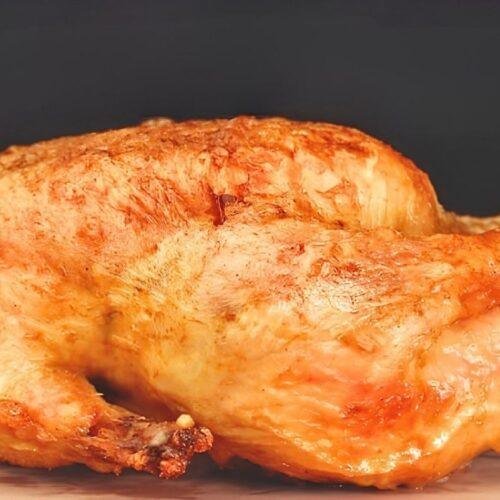
Crispy Skin Roast Chicken: Tricks No One Thinks About
A crispy skin roast chicken with tender, juicy meat, using just four ingredients: chicken, water, salt and fat. The chicken is poached in stock, dried on a rack, then roasted at 220C and flipped every 15 minutes, which is the closest I can get to a rotisserie chicken in a regular oven. You also end up with a rich homemade stock.
Equipment
- Baking / Roasting tray
- Wire / Cooling rack
- Strainer / Sieve
- Chef's knife
- Chopping board
- Measuring jug
- Thermometer / Probe
- Saucepan
- Pastry brush
- Tongs
Ingredients
- 1 x chicken
- Chicken stock homemade or bouillon to get started - see video
- 2 litres water
- Oil
- Salt and pepper
Instructions
- Slice the skin where the elbow of the wing is, then bend the wing back until the elbow joint dislocates. Slice through the gap between the bones to free the wing. Save these for roasting later!
- This is the fatty tip of the tail. Simply slice it off to avoid bitterness.
- Trim some excess neck skin but leave enough to shrink during roasting. Feel for the two bones of the wishbone, pierce your knife behind them and slice down, crunching through. Repeat on the other side, then wiggle the bone free.
- Gently push your fingers between the skin and breast meat to break the membrane. Work from the neck end down across the meat and over the tops of the legs, then flip the chicken over and repeat down the spine and leg area.
- Lift the chicken up, open the skin from the neck end, and sprinkle in some salt. Massage the salt into the meat as thoroughly as possible, then flip the chicken over and repeat on the other side.
- Let the chicken rest for at least 30 minutes, or up to 12 hours for deeper flavour.
- Heat 1.5 to 2 litres of chicken stock (or bouillon-based stock) to a simmer.
- Carefully place the chicken into the simmering stock for 15 minutes, keeping the liquid at a gentle simmer rather than a boil.
- Use silicone-tipped tongs to avoid tearing the skin, then place the chicken on a rack set over a roasting tray.
- Let the chicken sit for 20 minutes to dry and tighten the skin. Meanwhile, bring your stock back to a simmer for 10 minutes to kill any bacteria.
- Set your oven to 220°C (428°F).
- Once the chicken feels dry to the touch, brush it with olive oil (or chicken fat) and sprinkle salt evenly across the skin. Flip and repeat on the other side, then start roasting with the spine facing up.
- Roast for 15 minutes, then flip the chicken. Repeat this flipping and basting every 15 minutes for a total cooking time of 1 hour 10 minutes, using the fat that collects on the tray to baste for extra crispiness.
- Bring the chicken out when the deepest part of the breast reads 75-80°C (167-176°F). You can pull it as low as 70°C, as resting will carry it up to around 75°C.
- Rest the chicken for at least 30 minutes before carving for juicy, tender meat.
- Thanks to the removed wishbone, you can now carve smooth, clean slices from the breast.
- Collect the carcass, wings, and any leftover trimmings, then simmer them in your stock for a few hours to develop a rich, flavourful stock. Strain and store in portions for future use. This method creates a roast chicken with crispy skin, tender meat, and a rich stock that only gets better with each use. Enjoy!
Video
Nutrition
Serving: 1servingCalories: 379kcalCarbohydrates: 0.1gProtein: 41gFat: 22.7gSaturated Fat: 6gCholesterol: 132mgSodium: 317mgPotassium: 337mg
Tried this recipe?Let us know how it was!