
Soft Flatbread: 3 Simple Tricks For Supple Flatbreads
Last updated on October 13th, 2026
Flatbreads are both beautifully simple and deceptively tricky.
The simplicity lies in the ingredients, usually no more than three or four. The challenge comes in achieving that perfect texture. We want them supple, soft, and flexible. If you want an even softer dough to start from, my quick milk and olive oil flatbread shows what a little extra fat and protein does for texture.
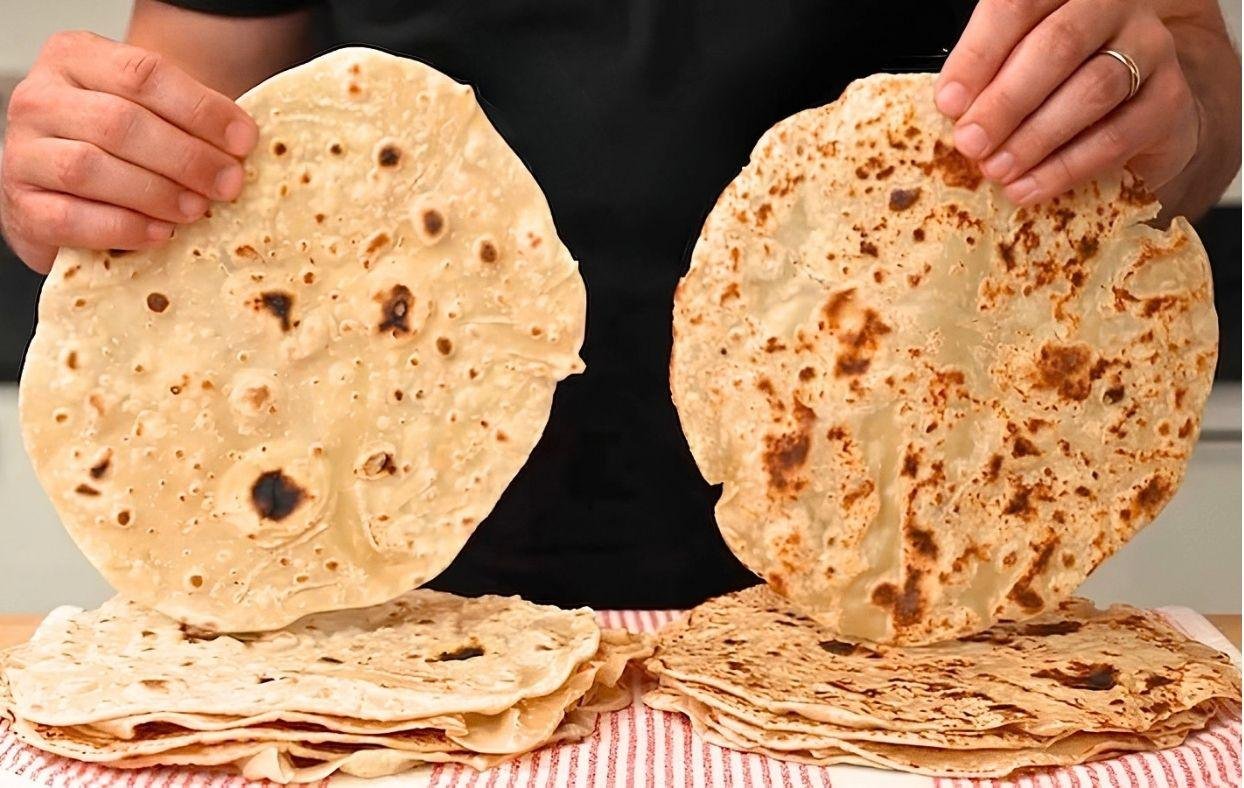
Today I’ll show you the three key things I focus on to get soft, pliable flatbreads like these. They’re exactly what I serve with a tray of garlicky Lebanese lemon chicken.
How To Make Soft Flatbread At Home: Hydration And Rest
Start with 300g of bread flour, 180ml of water, and 6g of salt, which is around 60% hydration. This is a good ratio to begin with for flatbreads specifically, because you’ll be rolling the dough out very thin later, and a wetter dough makes that rolling step a nightmare. Bring the shaggy dough together with a wet hand so it doesn’t stick to your fingers, then cover it and leave it to rest for around 30 minutes. This rest isn’t just for convenience: it lets the flour properly hydrate, which makes a real difference to the final texture. Letting time do the work is the same idea behind my no-knead Turkish pide bread, where a preferment develops the gluten for you. From there, knead for just 2 to 3 minutes to develop a little gluten without overworking it, divide into six balls, and let them rest under a damp tea towel for 10 to 15 minutes before rolling.
Rolling Technique For A Perfect Circle
To get a circular shape, lightly flour the worktop and the top of the dough, then push the ball down to start the circle. Using a rolling pin, only roll the middle three-quarters of the dough, leaving a small lip at the top and bottom. Then spin the dough 60° and repeat. Turning 60° gives six rotations per full turn, which naturally pushes the dough into a circular shape, while turning 90° only gives four rotations and tends to push it toward a square. Not rolling all the way to the edges also helps stop the dough from becoming misshapen or over-rolled. Once you’re close to the thickness of a coin, stop moving the dough and just use the rolling pin to even out the edges and any uneven spots, without rolling it any thinner. Rolled this thin and even, they fold neatly around Greek chicken souvlaki skewers without cracking.
How To Cook Flatbread: Pan Temperature And Timing
Cook in a completely dry pan (no oil or fat) over a medium to low heat. It’s a gentler approach than a puffed Greek pita bread, which relies on a burst of steam to force a pocket open. Flip every 20 seconds or so, adjusting the temperature under the pan until you start to see some colour developing in places. To keep the flatbread supple, don’t leave it in the pan for any more than 2 minutes total. They’re also just the thing for mopping up a pan of potato and pepper shakshuka. As they come out of the pan, stack them inside a clean tea towel, or use aluminium foil or two plates, one on top of the other, if you don’t have a tea towel you’re happy using this way. Trapping the steam like this is what keeps them warm and, more importantly, soft and pliable rather than letting them dry out and stiffen. Once they’re stacked and warm, they’re perfect for scooping up a thick homemade tzatziki or anything straight off the grill.
Make Them Even Softer With Lard (Mexican Flour Tortillas)
There’s one change that makes them softer and more supple still. Keep the 300g of bread flour, 180ml of water and 6g of salt exactly the same, but first rub 50g of lard into the flour, breaking it into small pieces and working it between your fingers and thumbs until there are no lumps of fat left. Then add the water and salt and follow the same process as before. In Mexico this isn’t called a flatbread, it’s a tortilla, and I lived there for almost 4 years. The added fat enriches the dough and adds another layer of flavour.
After the 30 minute rest the dough looks and feels a lot softer, so you’ll need a bit more flour on the worktop to stop it sticking, but it rolls out much more easily. Keep the same pan routine: flip every 20 seconds or so and no more than 2 minutes in the pan. Because of the fat, these brown more deeply, and they stay fresh for longer.
Why shouldn’t I make the dough too wet?
A wetter dough makes rolling nearly impossible, since the goal is to roll these out very thin. Around 60% hydration (300g flour to 180ml water) is a good starting point that keeps the dough manageable while still giving a soft result.
Why only knead for 2 to 3 minutes?
Kneading beyond this develops too much gluten, which makes the dough harder to roll out later. You want to see the surface still slightly textured with dips and peaks, not perfectly smooth like a pizza dough.
Why turn the dough 60° instead of 90° while rolling?
Turning 90° only rotates the dough four times per full turn, which pushes it toward a square shape. Turning 60° gives six rotations per full turn, which naturally rolls the dough into a circle.
How do I keep my flatbreads soft after cooking?
Stack them inside a clean tea towel as they come off the pan, or use foil or two plates. Trapping the steam is what keeps them warm, soft, and pliable rather than letting them dry out and stiffen.
Can I prep the dough ahead of time?
Yes. Once the dough is shaped into balls, you can place them in an airtight container with a damp paper towel and refrigerate for 24 to 48 hours. This develops even more flavour and is a great way to get ahead on prep.
Is this a flatbread recipe without yeast?
Yes. Both versions use only bread flour, water and salt, with 50g of lard added for the Mexican tortilla version. There is no yeast in either, so the softness comes from the 60% hydration, a short knead, a rest and trapping the steam after cooking.
Why is my flatbread hard?
Two things in my method protect against hard flatbread. Each one spends no more than 2 minutes in the pan to keep it supple, and they go straight into a clean tea towel, because trapping the steam stops them drying out and stiffening.
Soft Flatbread: 3 Simple Tricks For Supple Flatbreads
Equipment
- Mixing bowl / Bowl
- Knife (general)
- Digital scales
- Measuring jug
- Frying pan
- Rolling Pin
- Spatula (silicone, general)
- Spoon (table, dessert, tea)
Ingredients
- Simple Flat Bread
- – 300g bread flour
- – 180ml water
- – 6g 1 tsp salt
- Mexican Flour Tortilla
- – 300g bread flour
- – 50g lard
- – 180ml water
- – 6g 1 tsp salt
Instructions
- Mix all the ingredients together into a rough dough (if making the tortilla then rub the lard into the flour first – see video)
- Rest for 30 minutes.
- Knead the dough for no more than 3 minutes, separate into portions and leave to rest for another 15 minutes.
- Lightly flour your work surface, and roll the dough into your desired thickness (see video)
- Cook in a dry frying pan over a medium to low heat for no more than 2 minutes. In these 2 minutes you want to achieve the desired colour on the flat breads.
- Wrap in a towel to keep them warm and supple.
Video
Nutrition
Nutrition Facts
| Total Fat | 0.8g |
| Saturated Fat | 0.1g |
| Cholesterol | 0mg |
| Sodium | 389mg |
| Total Carbohydrate | 36.3g |
| Dietary Fiber | 1.2g |
| Sugars | 0.2g |
| Protein | 6g |
| Potassium | 50mg |

Hi Ben i stumbled on you youtube sit and tried you Yorkshire pudding and i had great success so many thanks will try others thank you regards sue