Roasted Carrots: 3 Simple Tricks for Plump, Juicy Results
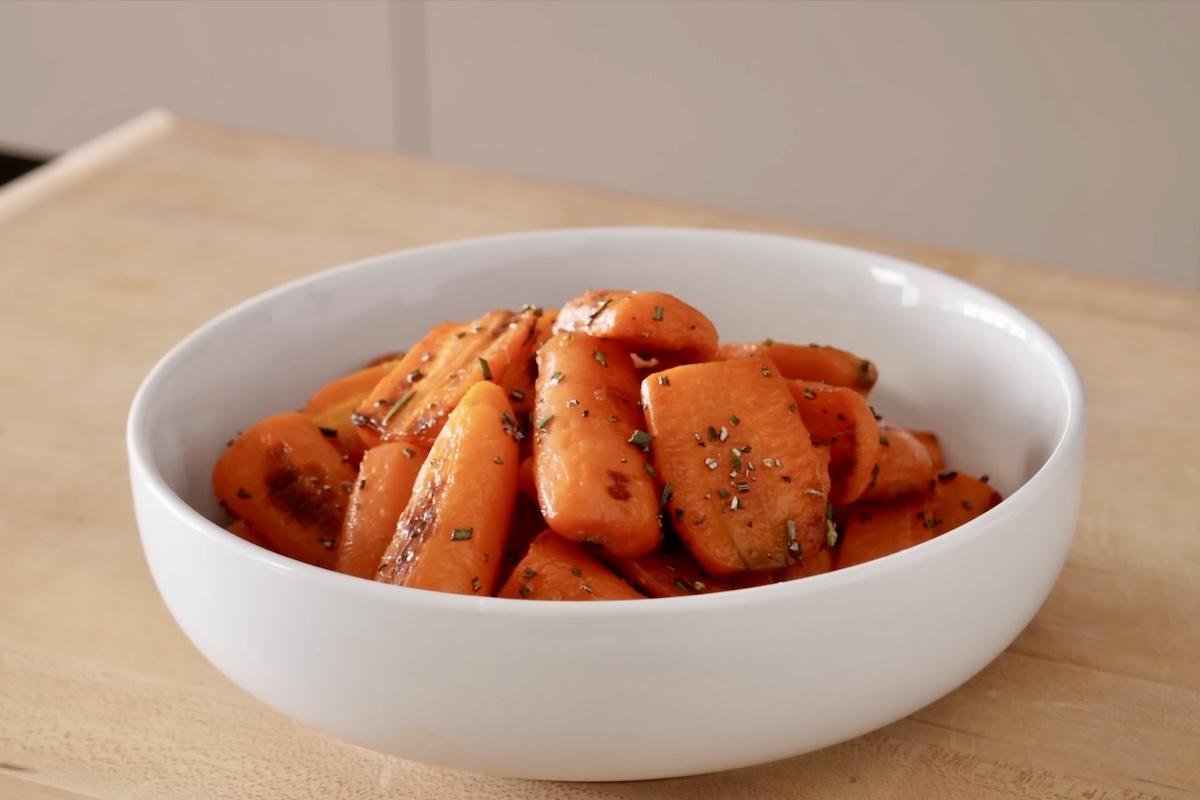
Dry, wrinkled roasted carrots are fixable with three simple steps: cut them bigger and even, give them some humidity before they roast, and coat every surface in oil. Do those three things and you get plump, juicy roasted carrots that still caramelise properly.
These steps work with any roasted carrot recipe, so think of this as a technique you can use with your own. I will also show you the flavours I like with carrots, which are orange, rosemary and honey, and how to get them done ahead of time to make the rest of your cooking easier.
Why Roasted Carrots Turn Out Dry and Wrinkled
Roasted carrots go dry and wrinkled when the oven dehydrates the outside faster than the middle cooks through. In a professional kitchen I would generally use an oven where I can control the humidity while the vegetables roast. Most home ovens cannot do that, mine included, so the tricks below put the moisture back in a simpler way.
If your oven does have humidity control, set it to around 30% and you can skip the parboiling in trick 2 altogether.
Trick 1: Cut Roasted Carrots Bigger and Keep the Pieces Even
Bigger is better for roasting. Larger pieces get more breathing room in the oven, and carrots shrink by at least 30% once cooked.
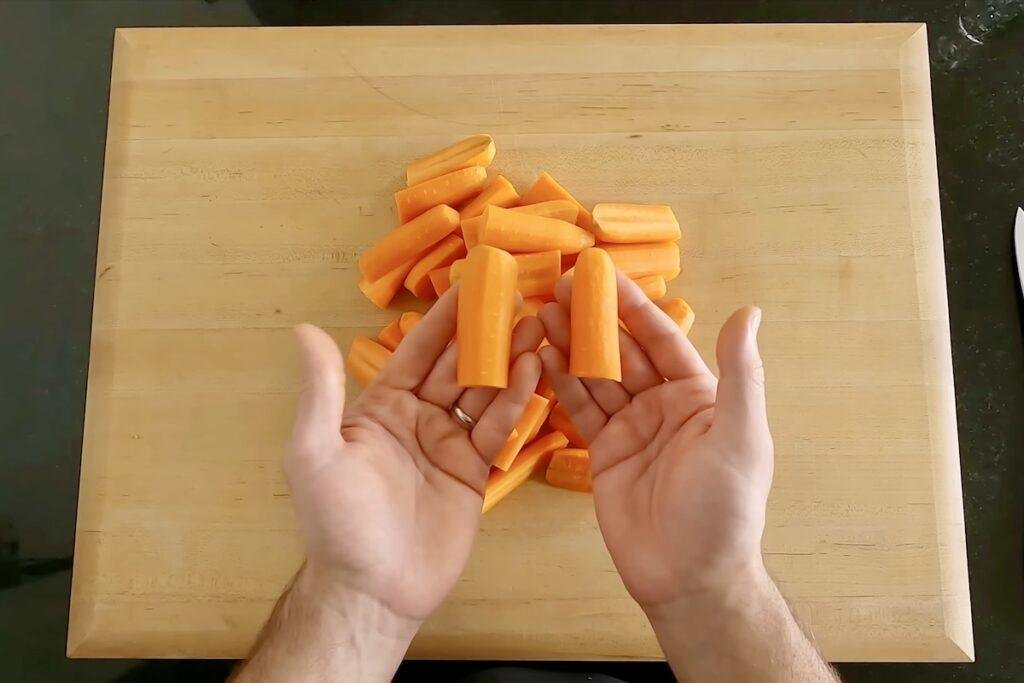
Keep the tapered root end whole and cut the thick body of the carrot in half, so the pieces come out an even size, around thumb size. It sounds like too small a detail to matter, but if you cut those thin root ends in half like the rest, they will be the pieces that come out dry and wrinkled.
Should You Peel Carrots Before Roasting?
It is up to you. I like mine peeled, but if you prefer them with the skin on, this method works exactly the same.
Trick 2: Do You Need to Boil Carrots Before Roasting?
Not if your oven has humidity control, but in a normal home oven I think this is the key step for avoiding dry, wrinkly carrots. You might get a few raised eyebrows for boiling vegetables you are about to roast, but it is a more basic version of how chefs roast vegetables in professional kitchens.
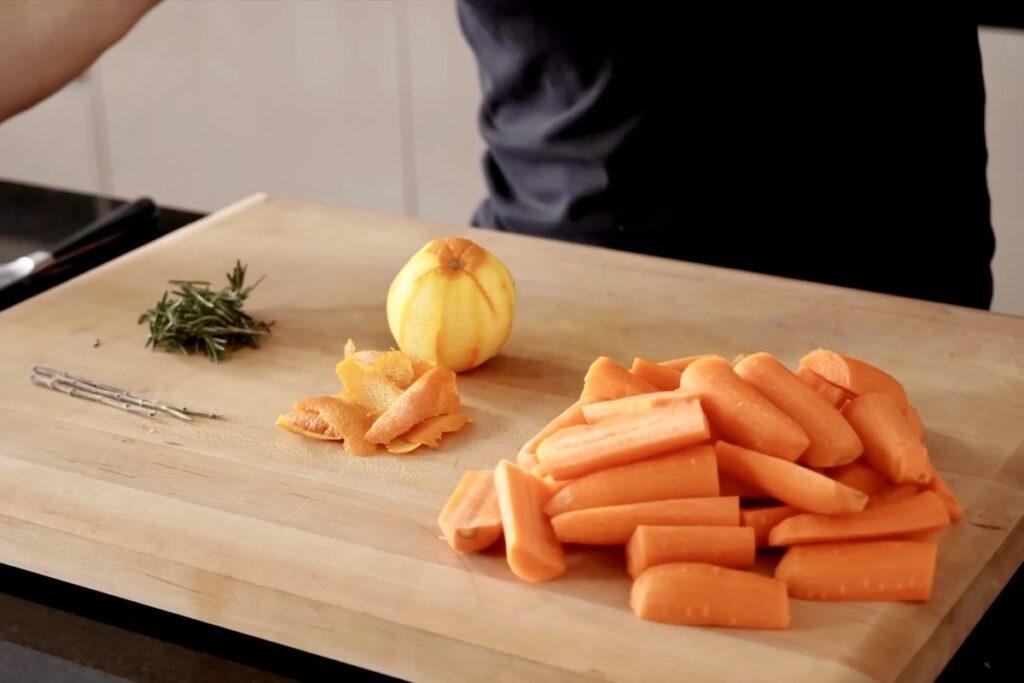
Prepare the aromatics first. I take the peel off an orange in strips and pick the leaves from two rosemary stems. Orange and rosemary go really well with carrots, and thyme, fennel, sage, lemon and most other citrus (limes aside) would work too. Keep the juice of half the orange and the rosemary leaves for later.
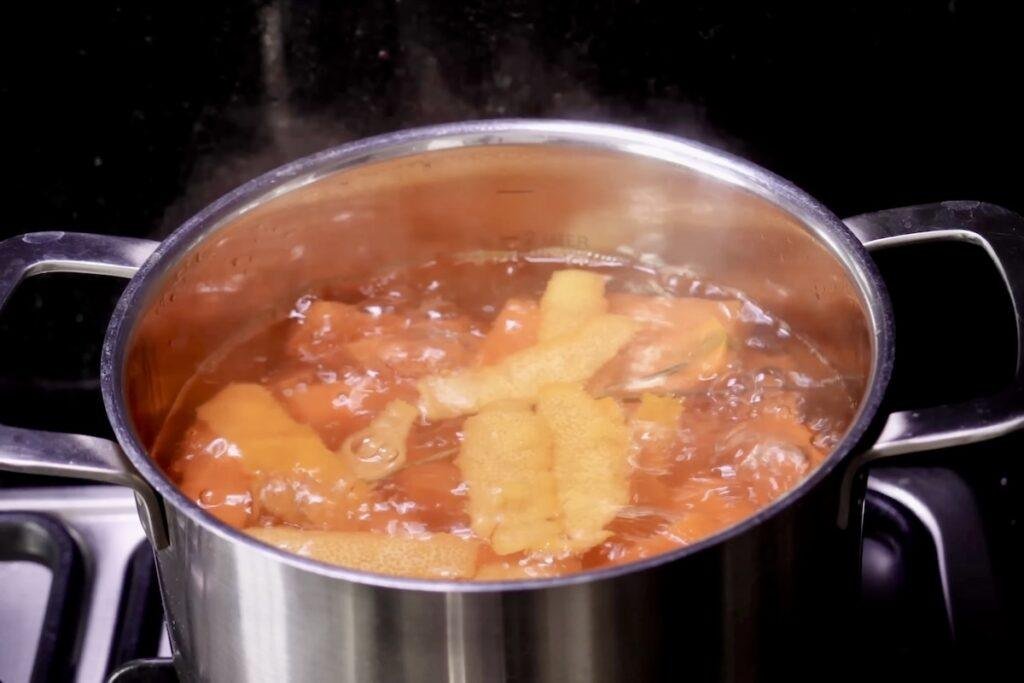
Put the carrots, orange peel and rosemary stalks in a pot, cover with cold water and add 1/2 teaspoon of salt (this is for 400 g of carrots). Bring to the boil over a high heat, then turn it down to a simmer and cook for 3 minutes. You are not trying to cook the carrots here, only to hydrate them, so they should still be very firm in the centre when you take them out.
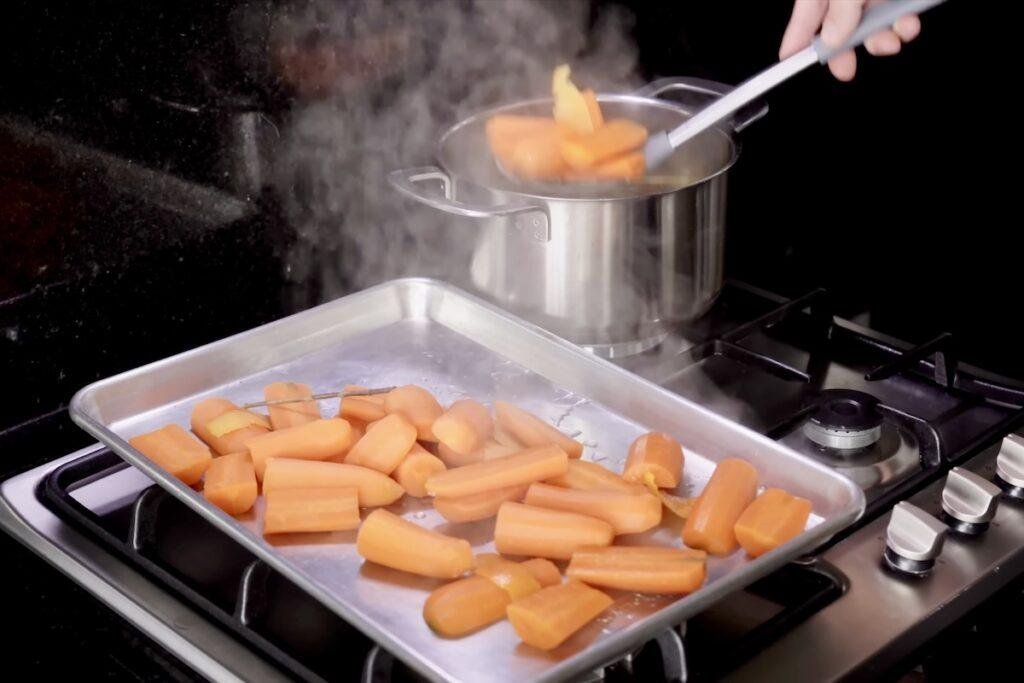
Drain them, or scoop them out onto a tray with the rosemary stalks and orange peel. A little water on the tray is fine. If you would rather not boil them, steam them for about 5 minutes instead.
Trick 3: Coat Every Surface in Oil
This one is so simple that everyone knows about it, but hardly anyone does it. Add the olive oil (15 ml for 400 g of carrots, so not a crazy amount) and a little salt, then mix really well until every nook, cranny and corner is thinly coated. Any dry, unoiled section will be the first to dry out and shrivel up.
Use your hands. Mixing with utensils is possible but clumsy, and tossing everything in a bowl just creates more washing up. The way I think about it is that olive oil is good for your skin, so there is no harm done.
It is close to how I roast my potatoes, so if you want the same thinking there, try my roast potatoes method that works with any variety.
What Temp Is Best for Roasting Carrots?
I roast at 200C (392F) in a conventional oven. Because the carrots have been parboiled, they handle that aggressive roasting much better than they would from raw.
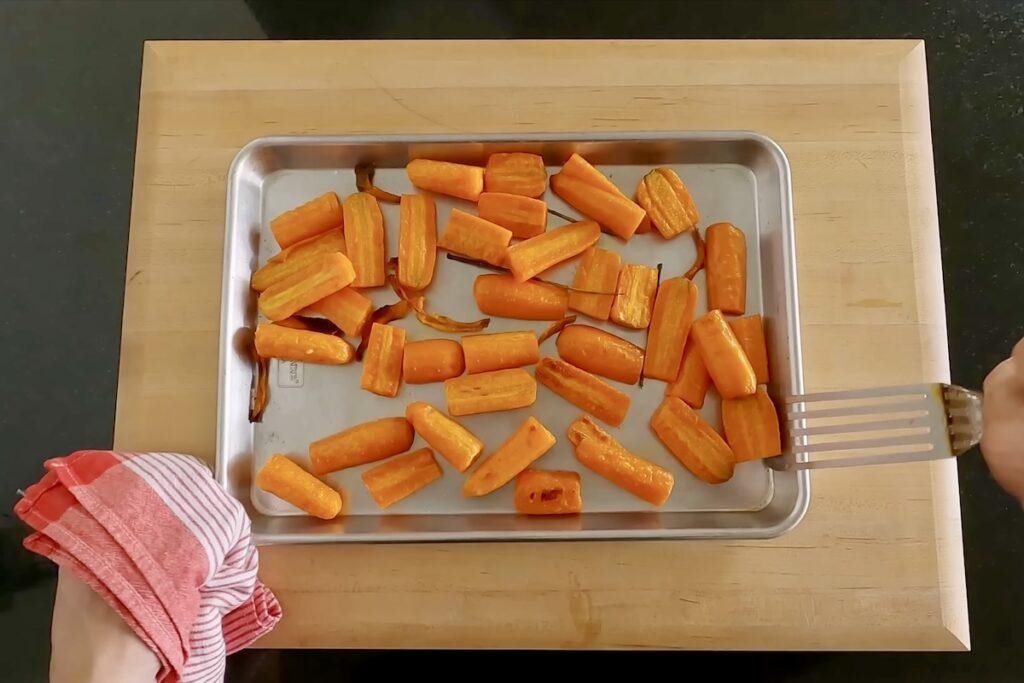
Roast for 10 minutes, then take the tray out and flip the carrots so different parts touch the base of the tray and are exposed to different parts of the oven. Roast for another 10 minutes and flip again. At the second flip, take out the orange peel, because it has given you its zesty flavour and is starting to get well roasted.
From there it is another 5 to 10 minutes, depending on your oven. I like mine with a little bite in the centre, so if you like them softer, just roast them longer. The three tricks give you plenty of room here, because they widen the gap between cooked all the way through and dehydrated on the outside.
Do You Add Honey Before or After Roasting Carrots?
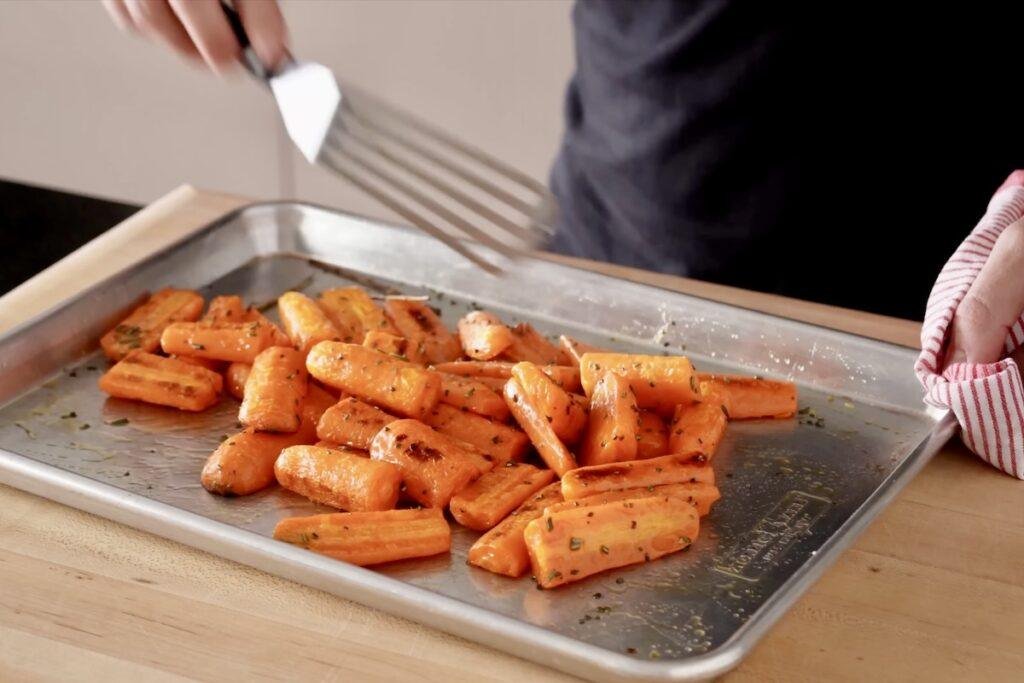
After. Once the carrots are close to how you like them, take them out and add the honey, the finely chopped rosemary leaves and the juice of half the orange. I use 1 tablespoon of honey for 400 g of carrots, because carrots are already sweet and I do not want too much.
Adding the rosemary late like this keeps its fresh, vibrant flavour and gives it no chance of burning into those little brittle wood chips. Mix well so everything is evenly coated, then return the tray to the oven for another 5 to 10 minutes to caramelise the honey. You end up with plump, juicy carrots, cooked all the way through with just a little bite in the centre.
Making Roasted Carrots Ahead of Time
After you add the glaze, you do not have to carry on. Let everything cool on the tray and finish it later, when the rest of the meal is ready, with 5 minutes in the oven at 200C (392F). Doing it this way makes the cooking process easier on the day.
If you like getting your sides done in advance, my charred Brussels sprouts can be prepped well ahead too.
Another side that keeps the oven free is my braised red cabbage, made in one pan.
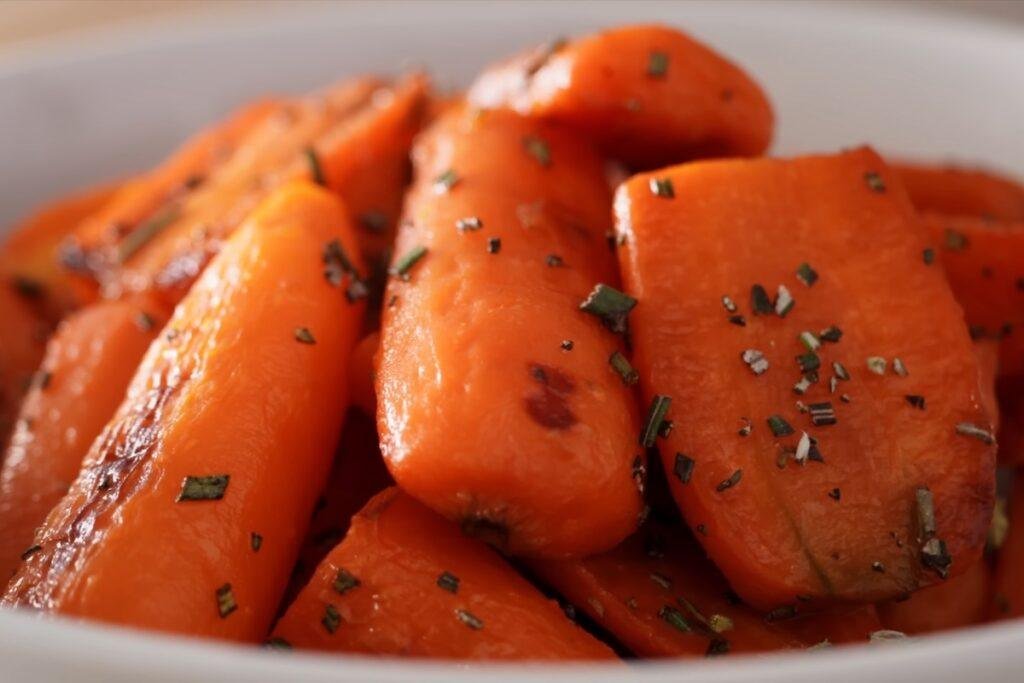
Roasted Carrots and Parsnips: Using the Method on Other Root Vegetables
You can follow these steps for whatever root vegetable you are roasting, whether it is parsnips, swedes, sweet potatoes or beetroot, and it works well with fennel too. Change the aromatics to whatever flavour you want, cut the vegetables on the larger side and to even sizes, give them some humidity by parboiling or steaming, and coat them all over in oil so there are no dry patches. All of that lets you roast at a higher heat to get the caramelisation we want.
These are small details chefs use to enhance the flavours and textures of vegetables. For another vegetable where small technique changes make a big difference, try my charred cabbage wedges with brown butter.
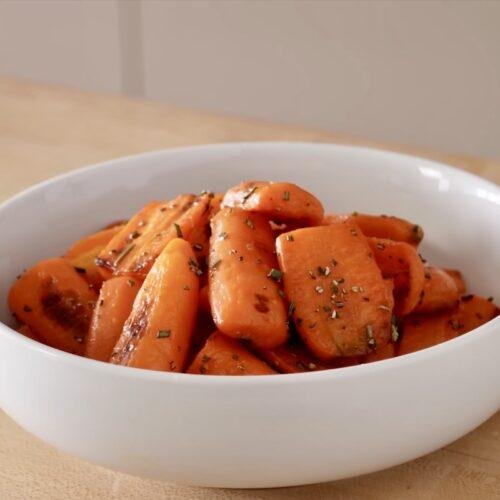
Roasted Carrots: 3 Simple Tricks for Plump, Juicy Results
Ingredients
- 400 g carrots peeled
- 1 orange peel taken off in strips, juice of half used for the glaze
- 2 rosemary stems leaves picked and finely chopped, stalks kept for the pot
- 1/2 tsp salt for the pot of water
- cold water enough to cover the carrots
- 15 ml olive oil
- 0.5 g salt for the tray
- 1 tbsp honey
Instructions
- Heat the oven to 200C / 392F (conventional). Peel the carrots. Keep the tapered root ends whole and cut the thick body of each carrot in half, so the pieces are an even size, about thumb size.
- Peel the orange in strips and set the peel aside. Pick the leaves from the rosemary stems and keep the stalks. Save the juice of half the orange for later.
- Put the carrots, orange peel and rosemary stalks in a pot, cover with cold water and add 1/2 teaspoon of salt. Bring to the boil over a high heat, then turn the heat down to a simmer and cook for 3 minutes. You are hydrating the carrots, not cooking them, so they should still be very firm in the centre. (Steaming for about 5 minutes works too.)
- Drain or scoop the carrots onto a tray with the rosemary stalks and orange peel. A little water on the tray is fine.
- Add the olive oil and salt and mix with your hands until every nook, cranny and corner is thinly coated in oil, with no dry patches.
- Roast for 10 minutes, then take the tray out and flip the carrots so different sides touch the tray.
- Roast for another 10 minutes, then flip them again and remove the orange peel, which has given you its flavour.
- Roast for another 5 to 10 minutes, depending on your oven, until the carrots are close to how you like them. I like them with a little bite in the centre. Roast longer if you prefer them softer.
- Take the tray out and add the honey, the finely chopped rosemary leaves and the juice of half the orange. Mix well so everything is evenly coated.
- Return the tray to the oven for 5 to 10 minutes to caramelise the honey, then serve.
Video
Notes
Nutrition
[bg-nutrition-label id=”12371″]