Slaw Recipes: How To Make Better Slaw That Stays Crunchy

Last updated on October 13th, 2026
These two slaws take cabbage in completely different directions, and neither one tastes like the mayonnaise-heavy coleslaw most people default to. If you’d rather cook your cabbage, my charred cabbage with brown butter is well worth a try. Of these two, one is a bright Polish-style apple and dill slaw with a lemon and olive oil dressing; the other is a Vietnamese-style chicken slaw with lime, fish sauce and crushed peanuts. Once the cabbage is salted, each comes together in minutes.
The Polish-style slaw has no mayonnaise to hide behind: tart apple, fresh dill, lemon and olive oil. The Vietnamese-style version adds shredded chicken, mint and coriander with a punchy lime and fish sauce dressing, finished with crushed peanuts for crunch. Both prove cabbage can carry a lot more flavour than most people give it credit for. Cooked low and slow, as in my one-pan Christmas red cabbage, it becomes a different vegetable again.
How to Slice Cabbage for Slaw
Take off the outer two layers, then cut the cabbage in half through the root. Sit it on its stable base, steady it with one hand and rock the knife through rather than pushing down hard. The more pressure you use, the easier it is to slip on something large, round and unstable.
Now slice from the root end, keeping the slices as consistent as you can. Starting at the root means that once the wedge turns into a pyramid shape you always have a flat side to flip onto, which keeps the slices even. Consistent matters more than thin: I prefer my slices a little thicker for a slaw, and I would use a knife rather than a mandoline on cabbage.
Salt the Cabbage to Stop Slaw Going Watery
If your slaw turns into a watery mess after 20 minutes, the problem isn’t the dressing or the type of cabbage. It’s the first step. Giving the cabbage time to release some of its water, with the help of salt, is the difference between a soggy, underwhelming coleslaw and a fantastic one. It also softens the woody texture of raw cabbage.
Because the cabbage is eaten raw and grows on the ground, I wash it first in a salad spinner. Cover the slices with water, add a generous amount of salt and leave for 10 to 15 minutes, giving it a jiggle now and then so any dirt settles to the bottom. Drain it, spin it as dry as you can, then salt it liberally in the basket, but not so much that it turns into sauerkraut. I used around five pinches of coarse sea salt on a whole cabbage. Mix it in properly and be a little forceful with the slices to speed up the brining.
Leave it for anywhere between an hour and a few hours. Mine had about an hour and a half: slightly wilted, still crunchy, but it had lost its raw edge. Only a little liquid had come out, but that is enough to make a soggy slaw. From here you could make a classic coleslaw by adding thinly sliced carrot, onion, mayonnaise and a little vinegar.
Two Slaws to Make With Salted Cabbage
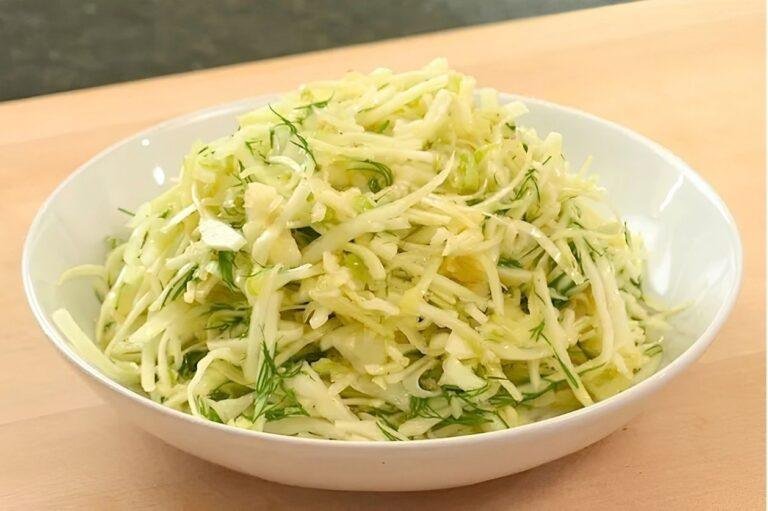
Polish-style apple and dill slaw
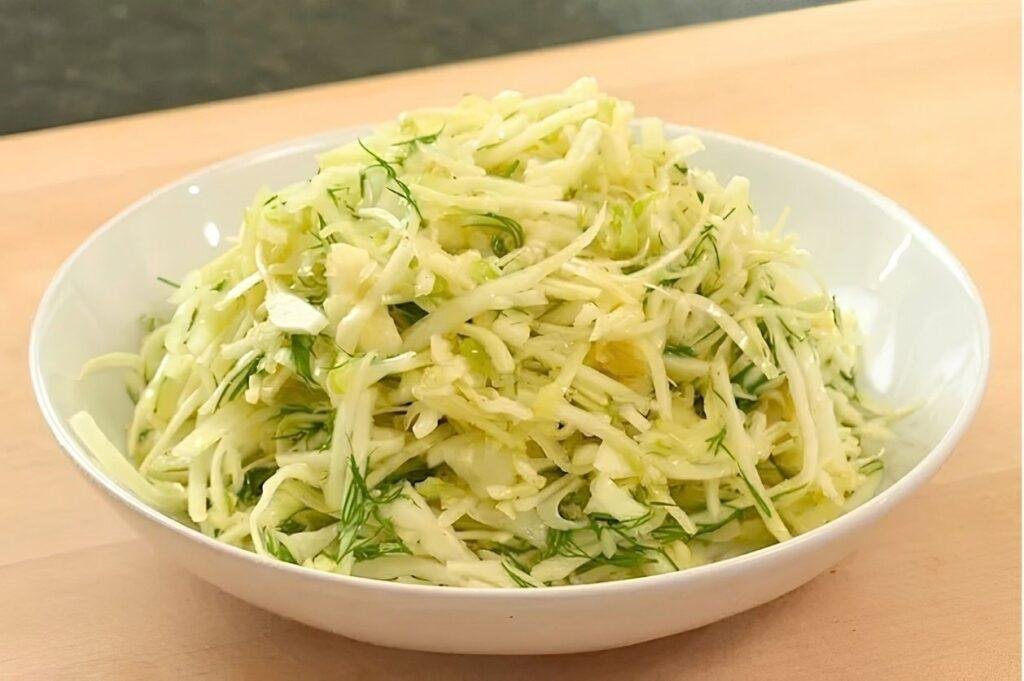
Grate a tart apple such as a Granny Smith into half of the salted cabbage, then pick the dill in by hand rather than chopping it.
Dress it with cracked black pepper, extra-virgin olive oil, fresh lemon juice, and an optional heaped teaspoon of sugar to take the edge off the lemon without making the slaw taste sweet. The oil-to-acid balance follows my simple salad dressing framework. Mix thoroughly so the apple and dill are distributed evenly through the cabbage. It’s close in spirit to a traditional Polish surówka, with the olive oil added for a bit of extra richness.
What makes it work is the balance: the cabbage stays crisp rather than woody or soggy, and the tart apple, fragrant dill, and bright lemon all pull in the same direction instead of competing. It’s a simple slaw, but that balance is what makes it worth making again. If you like that kind of balance, my two better potato salads are built on the same idea.
The full quantities and method are in my Polish apple and dill slaw recipe.
Vietnamese-style chicken slaw
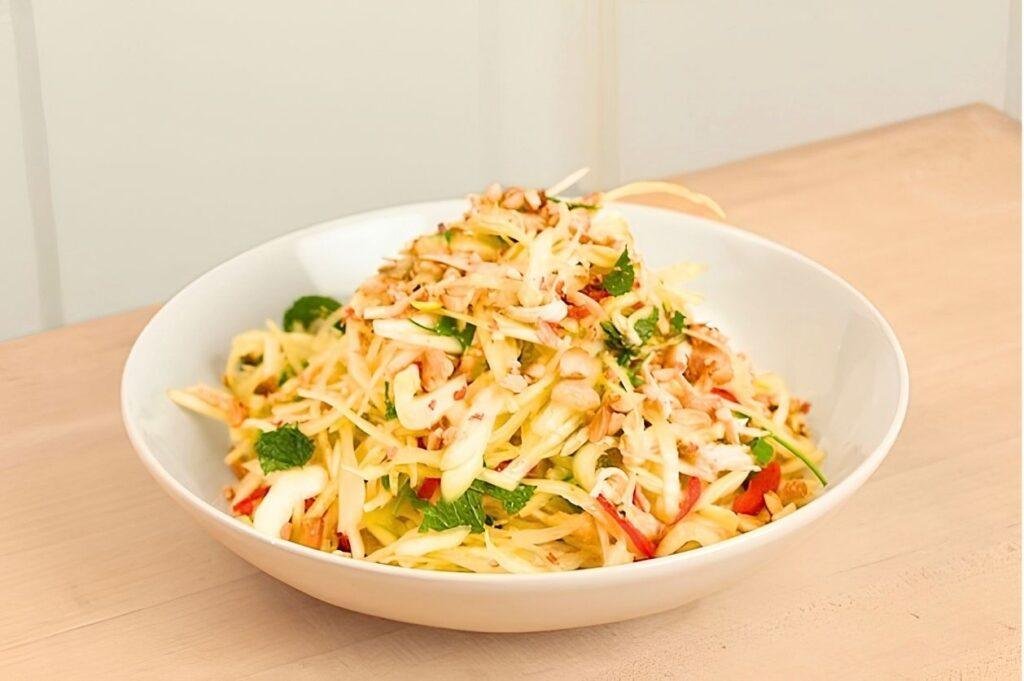
Start with the other half of the salted cabbage, then add thinly sliced red chillies and brown onion, and generous handfuls of coriander and mint. For the chicken, cook the breast simply in oil and salt, let it cool, then shred it into pieces roughly the same size as the shredded cabbage so it mixes through evenly rather than clumping. It’s a quick cousin of my full Vietnamese gỏi gà chicken salad.
The dressing is lime zest and juice, garlic, rice wine vinegar and fish sauce, balanced with sugar. The full quantities are in my Vietnamese slaw recipe.
Finish with crushed toasted peanuts for crunch: crispy shallots work just as well if that’s what you have. Crispy shallots and crushed peanuts also finish my chicken pad thai stir fry. It’s a genuinely fresh, fragrant slaw, the kind of thing I’d call a party in a bowl: familiar ingredients, taken somewhere more interesting.
Frequently Asked Questions
Can I use red cabbage instead of white for these slaws?
Yes, red cabbage works in both recipes and adds a striking colour contrast, especially in the apple and dill slaw. It has a slightly firmer texture and a touch more peppery bite, but the technique and timings stay the same.
How far ahead can I make these slaws?
Both are best dressed shortly before serving so the cabbage keeps its crunch. You can prep the cabbage, herbs and chicken a few hours ahead and store them separately, then mix everything with the dressing just before eating.
What can I use instead of fish sauce in the Vietnamese-style slaw?
A light soy sauce works if you don’t have or like fish sauce, though it won’t have quite the same depth.
Can I make the Polish-style slaw without the sugar?
Yes, the sugar is optional and only there to balance the acidity of the lemon. The slaw isn’t meant to taste sweet.
What’s the best way to shred the cabbage for these recipes?
Use a sharp knife. Halve the cabbage through the root, rock the knife through, then slice from the root end so you always have a flat side to turn onto. Keep the slices consistent: I prefer them a little thicker for a slaw, and I’m not a fan of a mandoline for cabbage.
How do you keep coleslaw from getting watery?
Salt the sliced cabbage and leave it for an hour to a few hours before you dress it. It releases some of its water, so the slaw stays crunchy instead of turning soggy 20 minutes after mixing.