Patatas Bravas Recipe | Spanish Potatoes & Tomato Sauce
Last updated on October 13th, 2026
Patatas bravas is deceptively simple, crispy potatoes and a spicy tomato sauce, but most versions get one of two things wrong: soggy potatoes, or a flat, one-note sauce. The fix for the potatoes is bicarbonate of soda in the boiling water, which roughs up the surface starch so it crisps properly in the oven. It’s the same roughing-up principle behind my foolproof roast potato method. The fix for the sauce is building it in layers: a blended paste fried into a loose roux, then vinegar, sugar and paprika, then tomato and stock, cooked down until it leaves a trail when you drag a spatula through it. Get both right and this genuinely earns its reputation as one of the best potato dishes going. If you’re after a lighter crispy side, try my golden polenta fries.
Why Bicarbonate of Soda Goes in the Boiling Water
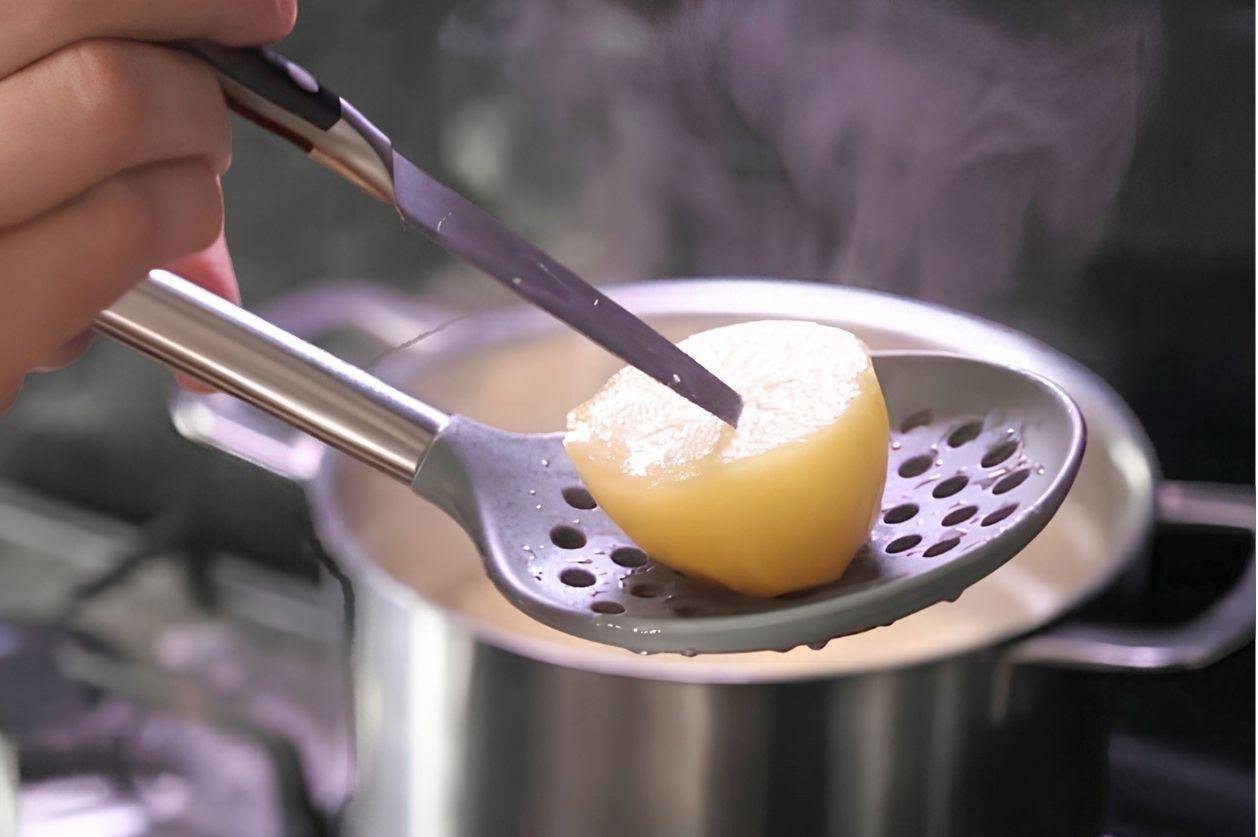
Fill a pot with 1.5 litres (approximately three pints) of water and add 20 grams of salt and half a teaspoon of bicarbonate or baking soda. The bicarb raises the water’s alkalinity, which breaks down the potato’s surface starch: that roughed-up surface is exactly what crisps up so well once the potatoes hit a hot oven. Preheat the oven to 200 degrees Celsius (400 degrees Fahrenheit) and place a baking tray inside. Unlike most boiled potatoes, these go straight into boiling water rather than cold water brought up to the boil: it helps create texture on the outside of the potato.
Best Potatoes for Patatas Bravas
Spanish white potatoes, also known as pataca de Galicia, are the traditional choice here, prized for their firm yet creamy texture once cooked. If these aren’t available, opt for charlotte or Maris Piper potatoes in the UK, or Yukon Gold potatoes in North America. Peel the potatoes and cut them into large chunks, then add them to the boiling water.
Creating the Bravas Sauce Paste
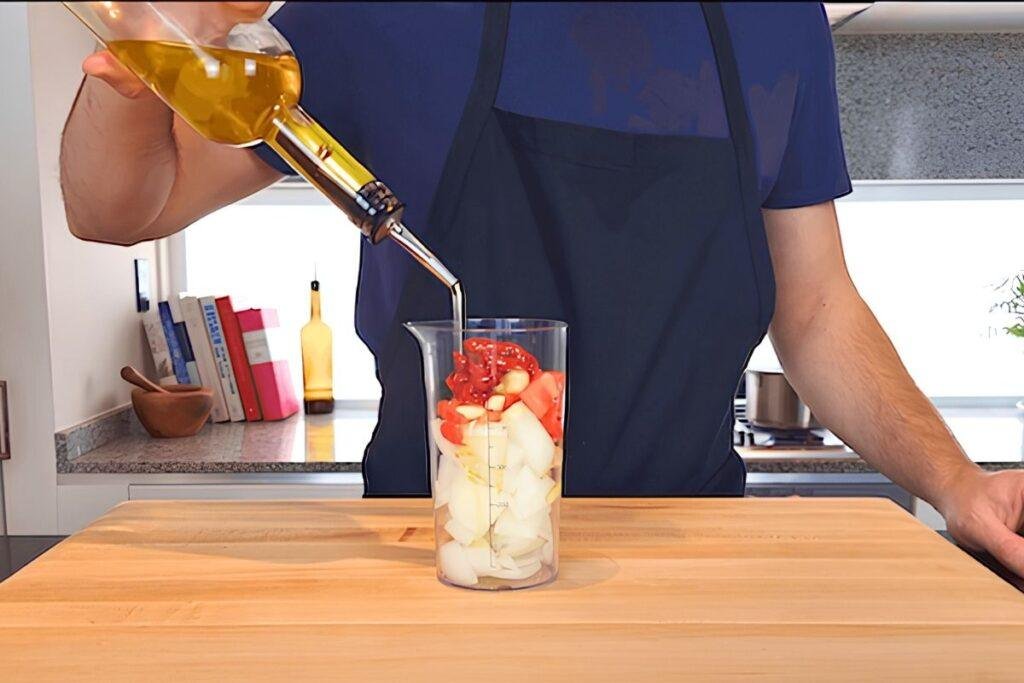
Start the bravas sauce with a paste. Take half a white onion and a quarter of a red pepper and chop them roughly to manageable sizes for blending. Add a strong pinch of salt, approximately one full teaspoon, along with two whole peeled garlic cloves and one dried chilli (use more if your chillies are milder). Add a generous squeeze of tomato paste, around a heaped tablespoon, and a glug of extra virgin olive oil, roughly three tablespoons. Blend all these ingredients into a smooth paste using a stick blender: it’s worth using over a jug blender for a small batch like this, since everything just sticks to the sides of a bigger blender and is a pain to clean.
Prepping the Potatoes Before They Go in the Oven
After around 10 minutes of simmering, the potatoes should feel tender when pierced with a knife while maintaining their shape. Remove them from the pot and place them in a bowl to steam off for a few minutes. This steaming process will help dry the surface of the potatoes slightly, ensuring crispy perfection in the oven. Add some olive oil, approximately three tablespoons, and a light pinch of salt, evenly coating the potatoes while roughing up their surface to achieve that irresistible crispiness.
How to Make Patatas Bravas in the Oven
Roast the potatoes at 200 C (400 F) on the preheated tray for 20 minutes, flip them, then give them another 15 to 20 minutes. If you’d rather deep-fry, skip the oil and salt toss in the previous step, let the potatoes cool a little more, then fry them. Retrieve the preheated baking sheet from the oven (be cautious: it’s hot!), and carefully place the seasoned potatoes on it. As they make a sizzling sound upon contact with the tray, drizzle a touch more olive oil on top. Into the oven they go for their first 20 minutes.
How to Make Patatas Bravas Sauce: Roux First, Then the Paste
Patatas bravas sauce is a blended paste of onion, red pepper, garlic, chilli and tomato paste, fried into a loose roux, then simmered with sherry vinegar, brown sugar, hot paprika, chopped tomato and stock for 20 to 30 minutes. Start it while the potatoes roast. In a medium pan over medium heat, add approximately two tablespoons of extra virgin olive oil. Introduce half a tablespoon of flour, cooking it to form a loose roux, for about two minutes. It’s the same idea as the flour-thickened mushroom sauce in my pan sauce blueprint. Now, it’s time to add the paste we prepared earlier, frying it off for five minutes to allow the onion, garlic, and tomato paste to release their full flavours. Stir regularly to prevent any sticking or burning.
Adding Tangy and Spicy Elements
After five minutes of cooking and stirring, incorporate 20 millilitres (approximately one and a half tablespoons) of sherry vinegar, offering a tangy twist to the sauce. Additionally, add one heaped tablespoon of brown sugar and one tablespoon of hot paprika. If you prefer milder flavours, feel free to use sweet paprika. Keep the sauce at a heavy simmer for two to three minutes, stirring regularly to prevent the sugar and paprika from sticking to the pan.
Building Complexity With Tomato and Stock
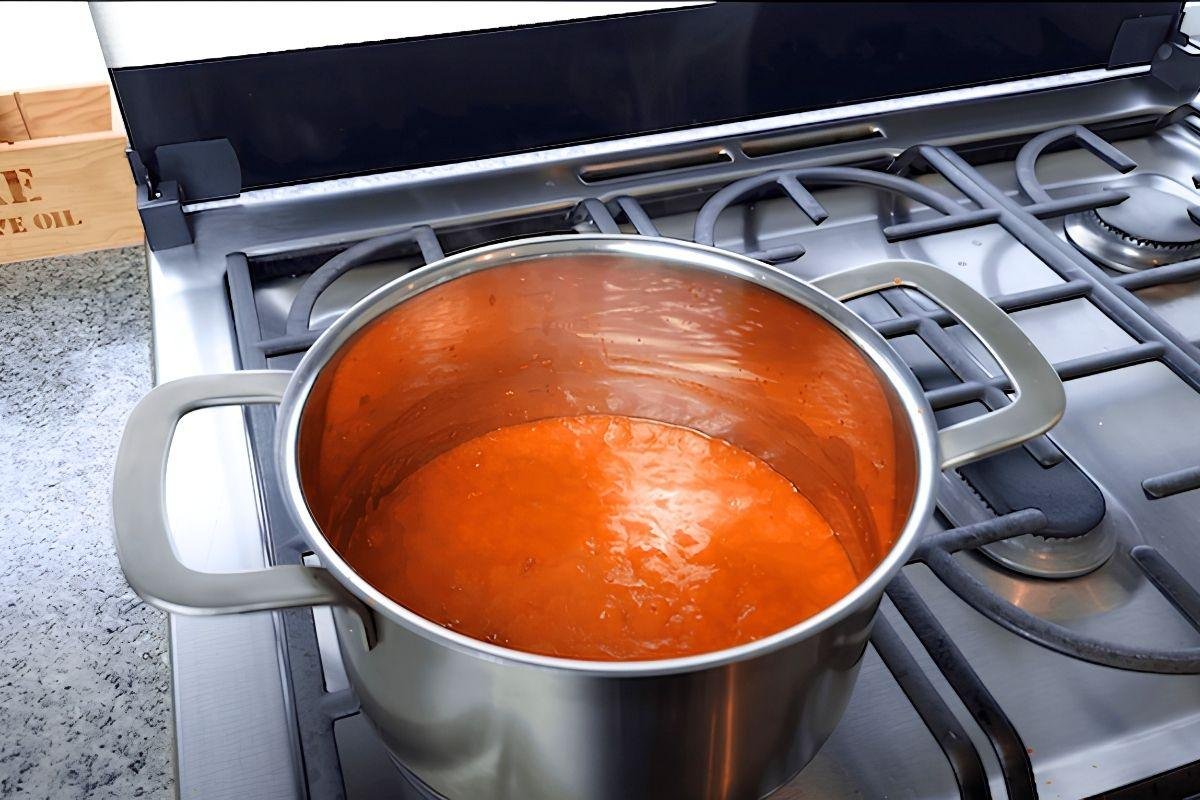
It’s time to enhance the sauce with the addition of chopped tomatoes: approximately 200 grams or a cup’s worth. Feel free to use whole peeled tomatoes, crushed manually, or fresh tomatoes, adjusting the cooking time accordingly. To further elevate the sauce’s depth, add 100 millilitres (approximately half a cup) of chicken stock. Ideally, ham stock would be traditional, but a half chicken stock cube in water serves as an excellent substitute. Adjust the stock for a vegetarian-friendly version using vegetable stock. My 30-minute homemade vegetable stock is perfect for this. Cook the sauce for an additional 20 to 30 minutes, stirring regularly to prevent sticking and burning.
Knowing When the Sauce Is Ready
After its 20 to 30 minutes of cooking, the sauce should have deepened in colour and thickened slightly. When you drag a spatula through it, it should leave a light trail behind. Give it a taste: it should be tangy, spicy and slightly sweet, a bit like a spicy ketchup. Adjust with salt, sugar or vinegar as needed.
Flipping the Potatoes and Keeping Them Hot
After the first 20 minutes, the potatoes should have a crust on the side that touches the tray and a few golden patches. Flip them and roast for another 15 to 20 minutes. This variety stays blonde and creamy rather than going golden all over like a russet would, so don’t push them any further. Give them one more flip, then put them back in the oven with the heat turned off to keep them hot while the sauce finishes cooking.
How to Serve Patatas Bravas with Aioli
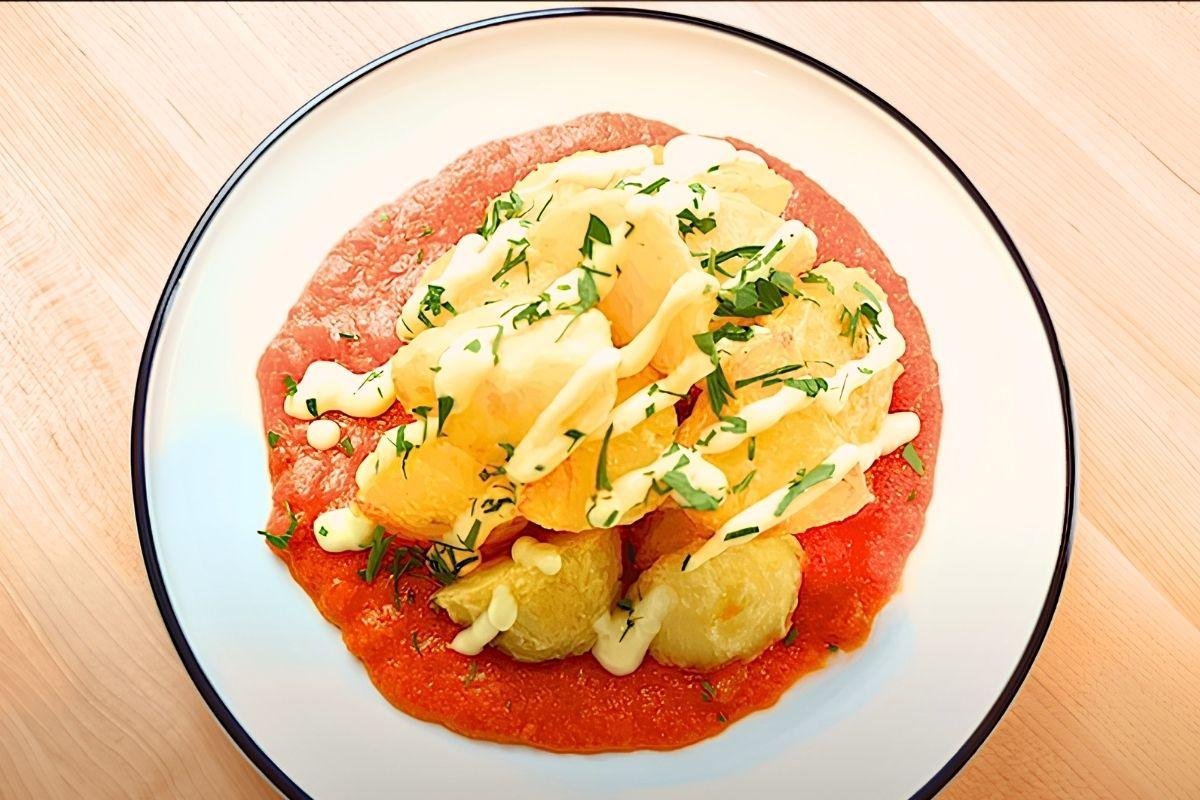
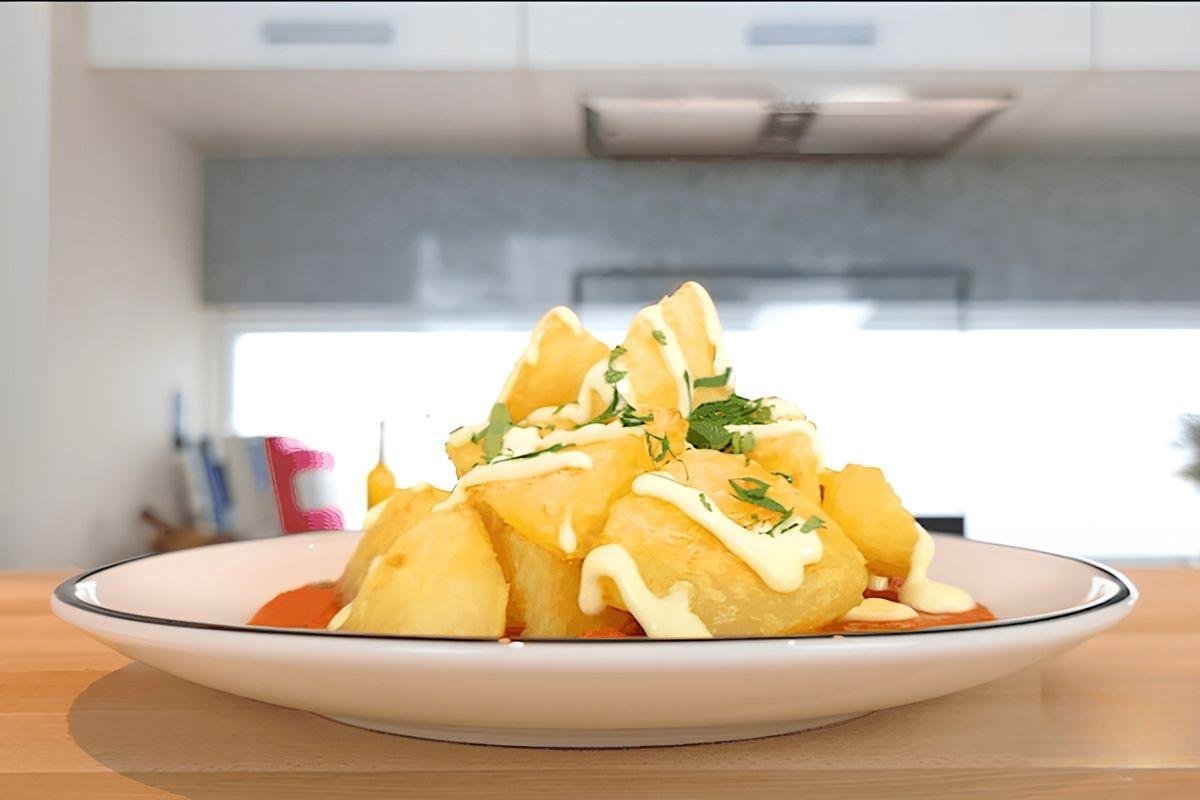
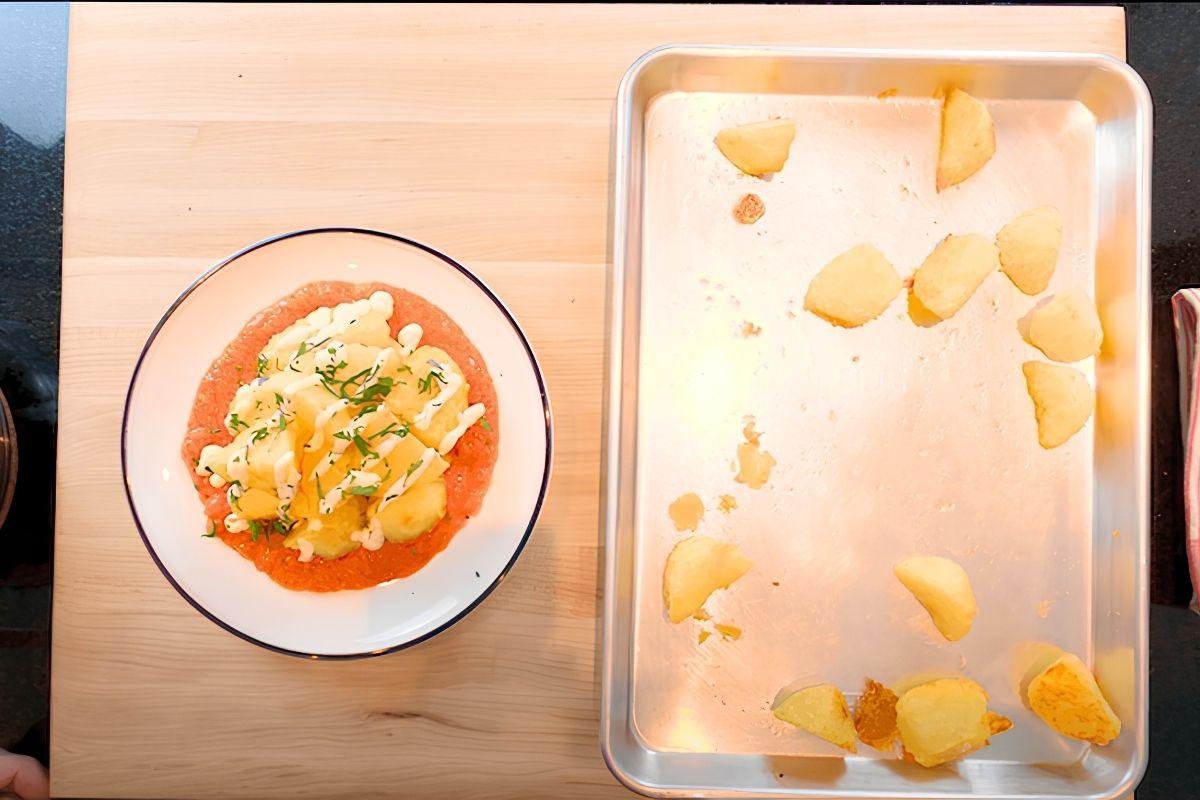
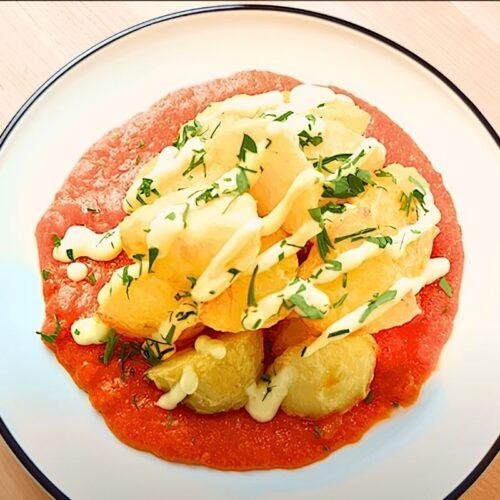
Plate the sauce first, then the potatoes, then finish with aioli and parsley. Leave the sauce to cool for about 10 minutes before you plate up. You can serve the sauce hot or warm: either way, it’ll be delightful. Any leftover sauce makes a brilliant base for a potato and egg shakshuka the next morning. To maintain the potatoes’ crispiness, serve them with the tomato sauce on the bottom, creating an appealing visual and culinary experience. Romesco is another tapas favourite, and my roasted pepper romesco works brilliantly here too. Pile the crispy potatoes high and finish them with a generous dollop of aioli. My classic aioli recipe uses an egg yolk so it holds together without splitting. Sprinkle some finely chopped parsley on top and you’re done. I’ve been cooking this dish for over 15 years, and this is the best version I’ve made.
Frequently Asked Questions
Why boil the potatoes in water with bicarbonate of soda?
Adding a little bicarbonate of soda (baking soda) to the boiling water raises its alkalinity, which helps break down the potato’s surface starch. That roughed-up surface is what crisps up so well once the potatoes go into a hot oven.
What’s the best potato variety for patatas bravas?
Spanish white potatoes (pataca de Galicia) are traditional, prized for a firm yet creamy texture once cooked. If you can’t get them, charlotte or Maris Piper potatoes in the UK, or Yukon Gold potatoes in North America, are good substitutes.
Should patatas bravas be deep-fried or roasted?
Most traditional recipes deep-fry the potatoes, but this version roasts them at 200 C (400 F) after parboiling. If you’d rather deep-fry, skip tossing the potatoes in oil and salt, let them cool a little more, then fry them.
What gives bravas sauce its tangy, spicy flavour?
A combination of sherry vinegar for tang, brown sugar for a touch of sweetness, and hot paprika for heat, all simmered into a blended paste of onion, garlic, red pepper, dried chilli and tomato paste, plus chopped tomato and stock, until it thickens.
How do I know when the bravas sauce is ready?
The sauce is ready when it’s deepened in colour, thickened slightly, and leaves a visible trail when you drag a spatula through it. Give it a final taste and adjust with a little more salt, sugar, or vinegar as needed.
Patatas Bravas Recipe | Spanish Potatoes & Tomato Sauce
Equipment
- Baking / Roasting tray
- Stick blender
- Mixing bowl / Bowl
- Chef’s knife
- Chopping board
- Vegetable peeler
- Digital scales
- Measuring jug
- Measuring spoons
- Large pot / Stockpot
- Saucepan
- Serving plate / Platter
- Slotted spoon / Spider
- Spatula (silicone, general)
- Wooden / Stirring spoon
Ingredients
- 1 kg Galicia potatoes Charlottes, Yukon golds, Elbas as alternatives
- 1.5 Litres / 3 pints of water
- 20 g of salt
- 1/2 Teaspoon of bicarbonate soda / baking soda
- Sauce Paste
- 1/2 White onion
- 1/4 Red pepper
- 2 x Garlic cloves
- Heaped tablespoon tomato paste / puree
- 3 x Tablespoons extra virgin olive oil
- Cooking the Sauce
- 2 x Tablespoons Extra virgin olive oil
- 1/2 tablespoon of flour plain / all purpose
- 20 ml / 1.5 tablespoons sherry vinegar red wine vinegar as an alternative
- 1 x Chilli I used a chile de arbol
- 20 g / 1 heaped tablespoon brown sugar
- 1 x Tablespoon hot paprika
- 200 g / 1 cup chopped tomato
- 100 ml or 1/2 cup of chicken / ham stock
- Parsley & Aioli to garnish.
Instructions
- Start by filling a pot with 1.5 litres (3 pints) of water and adding 20 grams of salt and half a teaspoon of bicarbonate (baking soda).
- Heat on medium-low and put a lid on and leave it to come up to a boil.
- Preheat your oven to 200 C (400 F) and place a baking tray in the oven.
- Peel and cut potatoes into large chunks
- Once the water reaches a boil, add the potatoes to the pot.
- Simmer the potatoes heavily for around 10 minutes, until a knife goes in easily but they are still holding their shape.
- In a separate bowl, prepare the paste for the bravas sauce by blending together half a white onion, a quarter of a red pepper, a pinch of salt, 2 garlic cloves, one dried chilli, a heaped tablespoon of tomato paste, and around 3 tablespoons of extra virgin olive oil. Blend with a stick blender until reasonably smooth.
- Once the potatoes are cooked, remove from the heat and let them steam off for a few minutes. Then add 3 tablespoons of extra virgin olive oil and a light pinch of salt and give them a mix around in the bowl.
- Place the potatoes on the preheated baking tray (they should sizzle), drizzle with a touch more olive oil and bake for 20 minutes.
- While the potatoes are baking, heat 2 tablespoons of extra virgin olive oil in a medium sized pan over a medium heat and add half a tablespoon of flour. Cook for 2 minutes, stirring at first, to cook out the flour.
- Add the paste to the pan and fry for 5 minutes, stirring regularly so nothing sticks and burns.
- Stir in 20 ml (1.5 tablespoons) of sherry vinegar, 20 g (1 heaped tablespoon) of brown sugar and 1 tablespoon of hot paprika. Cook at a heavy simmer for 2 to 3 minutes, stirring regularly as the sugar and paprika like to catch on the base of the pan.
- After 20 minutes in the oven, flip the potatoes and return them to the oven for 15 to 20 minutes.
- Add 200 g (1 cup) of chopped tomato and 100 ml (1/2 cup) of chicken or ham stock (half a chicken stock cube in 100 ml of water works well). Cook the sauce for 20 to 30 minutes, stirring regularly so nothing sticks and burns.
- Give the potatoes one more flip and put them back in the oven with the heat turned off to keep them hot.
- The sauce is ready when it has deepened in colour, thickened slightly and leaves a slight trail when you drag a spatula through it. Taste it: it should be tangy, spicy and slightly sweet. Adjust with salt, sugar and vinegar, then take it off the heat and leave it to cool for 10 minutes.
- Spoon the sauce onto the plate, pile the potatoes on top and finish with aioli and finely chopped parsley. Enjoy your patatas bravas.
Video
Nutrition
[bg-nutrition-label id=”4861″]