
Boulangère Potatoes Recipe: Cooked in Chicken Stock
Last updated on October 13th, 2026
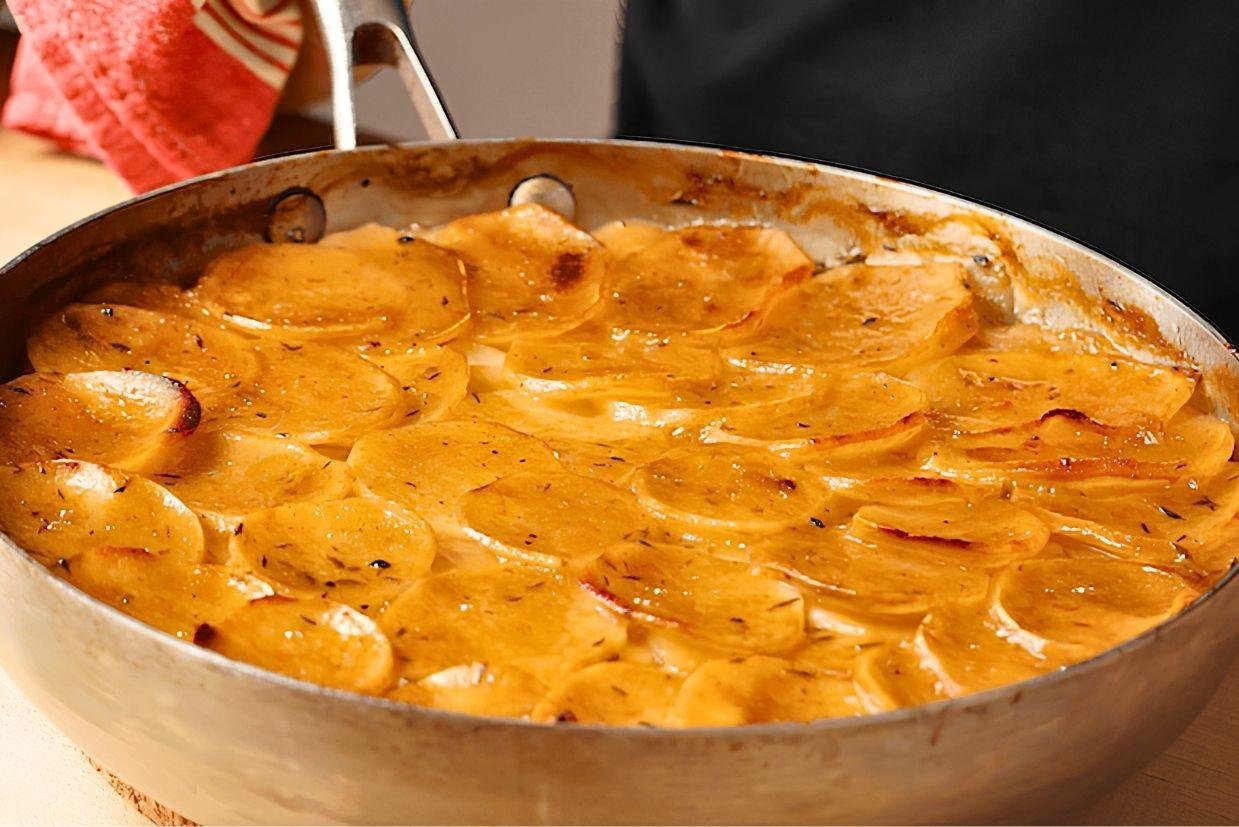
This boulangère potatoes recipe is a French potato dish that’s famous amongst chefs, but not so famous amongst home cooks, and I don’t know why. I think it’s tastier than dauphinoise potato, it’s cooked with chicken stock, so it has a deep savoury, french home cooking style flavour. If you make my poached and roasted chicken, that stock is perfect here. It reminds me of my grandma’s cooking. It’s the same kind of cooking behind my grandmother’s slow-cooked bourguignon.
But, the best thing, this recipe I’ll show you today uses very little fat, so I can enjoy this indulgent potato dish with not even a shred of the guilt I get with eating dauphinoise.
I’ll also show you how I get them cooked evenly, so you can apply these skills to your potato gratin, dauphinoise, scalloped potatoes or pom anna. It’s the same even-cooking thinking behind my crisp-edged fondant potatoes. And any other recipe that uses layered, thinly sliced potatoes.
What Boulangère Potatoes Are and Why I Prefer Them to Dauphinoise
Boulangère potatoes are thinly sliced potatoes layered over caramelised onions and baked slowly in chicken stock, so they come out tender and savoury and held together by their own starch. Unlike dauphinoise, this version uses very little fat, so you get an indulgent layered potato dish without the guilt.
Caramelising the Onions the Fast Way
Start with the onions, because they take the longest and set the flavour for everything else. Slice them in half, peel away the outer layers, and keep the trim, you’ll use it to flavour the stock in a minute. Slice the onions not too thin and not too thick, too thin and they turn to mush, too thick and they won’t cook evenly.
Add a small knob of butter to a cold frying pan with the sliced onions, a good amount of salt, and a shot of water, then put the lid on and start over a high heat. That splash of water is the trick, it speeds up the first wilting stage of caramelisation from 20 to 30 minutes down to about 5. Once the water’s evaporated and the onions have softened, take the lid off, drop the heat right down, and keep cooking, stirring occasionally, for another 35 minutes or so until they’re deeply browned and smell incredible.
Flavouring the Stock With Onion Trim and Thyme
While the onions cook, get the stock on. Rub a handful of thyme gently between your hands so most of the leaves come loose, pick off the rest, and save around a dessert spoon of leaves for the layers. Then put the stalks in a saucepan with water, two chicken stock cubes and all of the onion trim you saved earlier, and leave it on a medium heat to infuse until you need it. The trim and stalks bring some freshness to off-the-shelf stock cubes, and it’s waste that would otherwise go in the bin.
Best Potatoes for Boulangère and Why You Shouldn’t Rinse Them
One of the biggest mistakes with layered potato dishes is rinsing the potato slices, and it is easy to avoid. Any floury potato works here, I use russets. Floury potatoes are also what I reach for in my roast potato method for any variety. Peel them if you like, or leave the skins on, it’s your call. Slice them on a mandolin to about the thickness of a poker chip, if you don’t have a mandolin a sharp knife works too, just take your time to keep the slices even, since uneven slices cook unevenly. If you do use a mandolin, lock it into a bowl or container so it can’t slip, and keep your fingers well out of the way as the slices build up.
Once they’re sliced, work quickly, the longer they sit exposed to air the more they’ll oxidise and brown. And resist the urge to rinse them in cold water to stop that browning, the starch that rinses off is exactly what helps hold this dish together once it’s cooked.
How to Layer Boulangère Potatoes for Even Cooking
Spread half the caramelised onions over the base of the pan to build a bed of flavour, then add a little of the infused stock, this steams the potatoes from underneath and gets them cooking evenly from the start. For a vegetarian version, use a salt-free veg stock instead. Build up five layers of potato, fanning each one out evenly rather than just jumbling the slices in, with a little thyme, salt, pepper and stock between each layer. The third layer gets the rest of the caramelised onions, and the fifth is your top layer, so take a bit more care tucking in the slices to make it look good, then press it down until a little stock rises to the surface.
It’s tempting to chuck the slices in and jumble them around, but that leaves uneven mounds, like valleys and mountains. When you press, some parts get really compressed and others don’t, and the heat takes longer to get into the compressed sections, which is why a lot of people struggle with uneven cooking. Taking a moment longer to spread the slices out evenly saves time in the oven and gives a better result. And don’t be shy with the stock, it’s hard to overdo the liquid in layered potatoes, and I want a tender, moist dish, not a dry one.
How Long to Cook Boulangère Potatoes in the Oven
Bake at 160 to 170°C, no higher than 180°C, or the top will overcook before the centre’s ready. It’ll take just over an hour at around 165°C. After the first 30 minutes it won’t look too appealing, but that’s where the magic starts: give the layers their first press, then press them every 15 minutes or so as it cooks. Pressing brings the stock up to the surface, rehydrates the top layer and compresses the slices so the layers stick together and cook evenly top to bottom. A potato masher is the most common tool for this in professional kitchens, and a fork works well too. You’ll know it’s ready when a knife slides into the centre with no resistance. Serve it with a juicy reverse-seared steak for a proper French-style dinner.
Frequently Asked Questions
Why add a shot of water when you start caramelising the onions?
It speeds up the first stage of caramelisation dramatically. With the lid on, that splash of water creates steam that wilts and softens the onions in around 5 minutes, a stage that can otherwise take 20 to 30 minutes. Once the water’s gone and the onions have softened, you take the lid off and continue browning them properly over a lower heat.
Can I rinse the sliced potatoes in cold water to stop them browning?
I’d avoid it. Rinsing does stop the oxidisation, but it also washes off the surface starch, and that starch is what helps bind the layers together as the dish cooks. Work quickly instead once the potatoes are sliced, and you shouldn’t have a problem with browning.
What thickness should I slice the potatoes?
Aim for roughly the thickness of a poker chip. A mandolin gives you the most consistent result, but a sharp knife and a bit of patience works just as well, the important thing is even slices, since uneven ones cook at different rates and leave you with a patchy texture.
Why shouldn’t I bake this any hotter than 180°C?
Boulangère potatoes need a long, gentle bake so the heat has time to work all the way through the layers. Go hotter than 180°C and the top layer will brown and overcook well before the centre is tender, leaving you with a dish that’s dry on top and undercooked in the middle.
How do I know when the potatoes are done?
After about an hour, press a knife into the centre of the dish. If it slides in with no resistance, they’re ready. Pressing the layers down every 15 minutes or so, starting after the first 30 minutes, also helps them cook evenly, so the centre isn’t lagging behind the edges by the time the hour’s up.
What are the best potatoes for boulangère?
Any floury potato works well, and I use russets. You can peel them or leave the skins on, it’s your call. Slice them to about the thickness of a poker chip so they cook evenly.
What is the difference between dauphinoise and boulangère potatoes?
Boulangère potatoes are cooked in chicken stock, which gives a deep, savoury, French home cooking flavour, and this version uses very little fat. I think it’s tastier than dauphinoise, and I can enjoy it without the guilt I get eating dauphinoise.
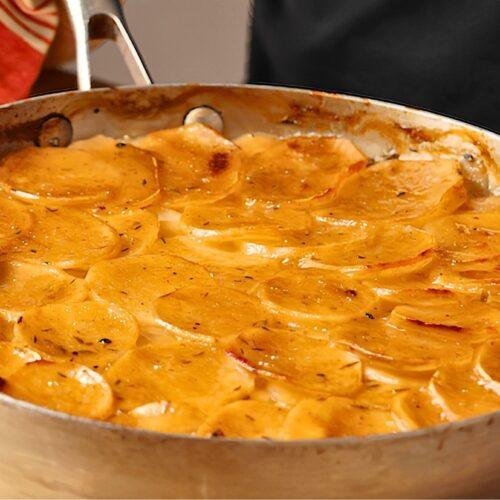
Boulangère Potatoes Recipe: Cooked in Chicken Stock
Equipment
- Mixing bowl / Bowl
- Chef’s knife
- Chopping board
- Mandoline
- Vegetable peeler
- Digital scales
- Measuring jug
- Oven-safe frying pan
- Saucepan
- Fork
- Ladle / Skimming spoon
- Potato masher
- Wooden / Stirring spoon
Ingredients
- 1.2 kg / 2.6lbs potatoes
- 2 white onions
- 25 g / 1oz butter
- A shot of water
- 750 ml / roughly 3 cups of chicken stock
- A handful of thyme
- Salt & Pepper
Instructions
- Slice onions in half, peel, save the trim for later, then slice thinly not too thin though.
- Add to a frying pan, a knob of butter, the onions, a good amount of salt and a shot of water. This shot of water is a key ingredient to speed up the caramelisation process of the onions.
- Cook in frying pan over a high heat for a few minutes to get them started, then reduce the heat and continue to cook (see video)
- Next, grab a saucepan, add 750 ml of water, 2 chicken stock cubes and all the onion trim from earlier and add the thyme stalks to the saucepan as well.
- Peel the potatoes, then slice them on a mandolin, I go for around the width of a poker chip. (see video)
- Once the onions are ready, remove half the onions and set aside, spread the rest out so they cover the base.
- Add a little stock, this will steam the potatoes from underneath and help them to cook evenly.
- 1st layer of potatoes, thyme, salt, a little pepper, stock.
- 2nd layer potatoes thyme salt pepper.
- 3rd layer potatoes this will have the other half of the onions thyme salt pepper
- 4th layer potatoes thyme salt pepper
- 5th and final layer, this is the layer to make pretty, so I’m taking a little extra time to tuck in the slices, and make it look nice, give it a press, some stock should rise to the surface, then I’m adding a bit more.
- Into the oven at 160-170°C, no higher than 180°C, otherwise the top will be cooked before the centre.
- After about 30 minutes, give the potatoes a first press, then press them every 15 minutes or so and rotate the pan to get them to cook evenly. They’ll be ready after just over 1 hour, you can check this by piercing a knife into the middle, if there’s no resistance they are ready.
Video
Nutrition
Nutrition Facts
| Total Fat | 3.9g |
| Saturated Fat | 2.2g |
| Cholesterol | 11.5mg |
| Sodium | 893mg |
| Total Carbohydrate | 39.1g |
| Dietary Fiber | 4.9g |
| Sugars | 3.7g |
| Protein | 5.4g |
| Potassium | 930.1mg |


I made this last night for friends and everyone loved them. They are as delicious as promised. And that they are essentially gluten free is just another of this recipe’s attributes. I have put this recipe in my rotation of go-to dishes. Thank you so much for sharing it.