Chimichurri Recipe: Fresh Herb Sauce for Steak and Grilling
Last updated on October 12th, 2026
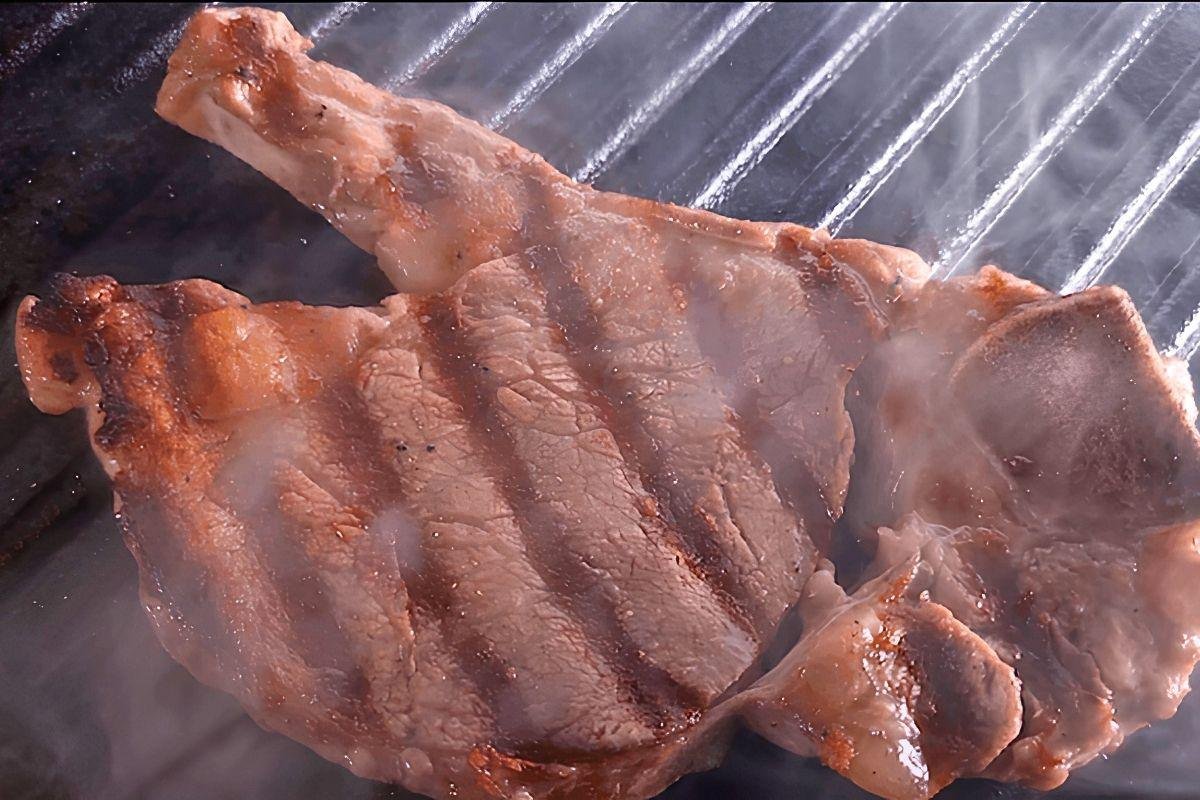
Chimichurri gets treated like an afterthought sauce, but it’s the difference between a good steak and a genuinely great one. Try it with a reverse-seared budget steak and you’ll see exactly what I mean. This is the chimichurri recipe I come back to for pretty much anything off the grill: bright with herbs, sharp with garlic and lime, and rounded out with just enough oil to carry it all. It takes about the same time as a steak needs to rest, and once the knife work clicks, you’ll want a jar of it in the fridge permanently. Everything is chopped by hand with a sharp knife (a microplane is optional for the garlic), so you don’t need a food processor.
How to Make Chimichurri Sauce
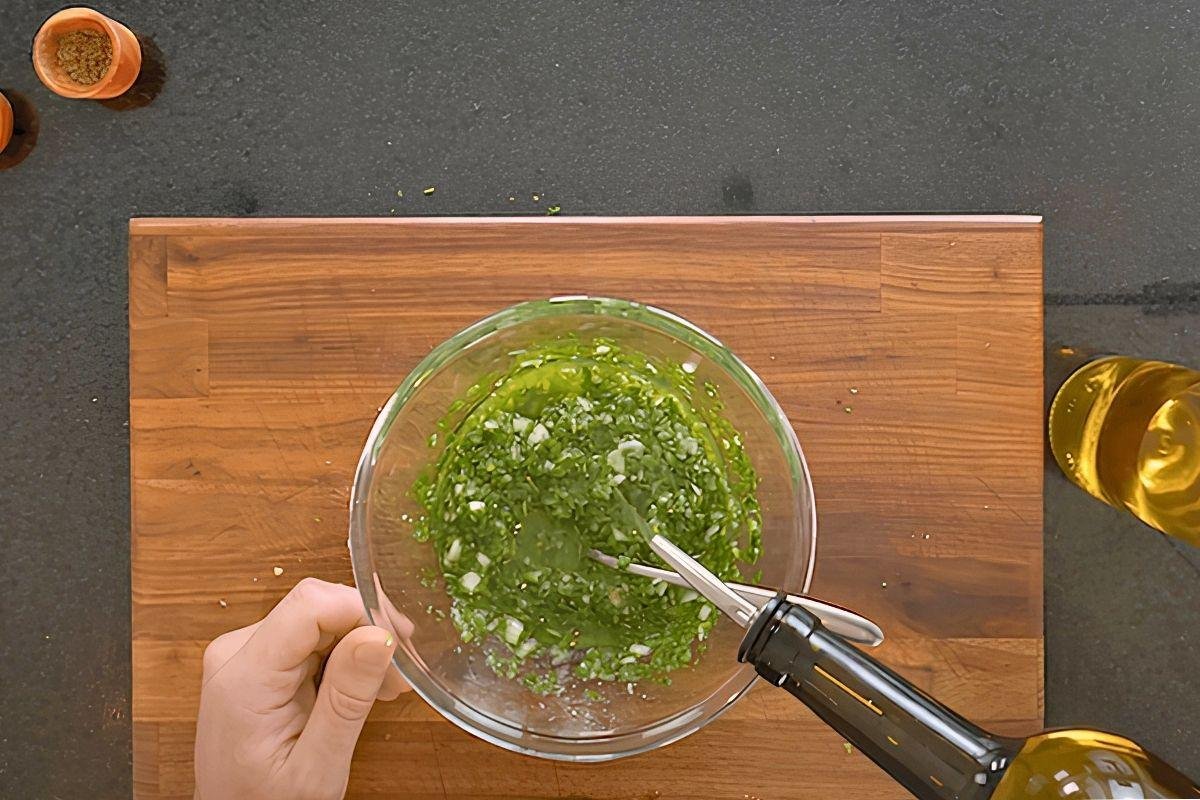
Chimichurri is made by hand-chopping garlic, parsley, oregano, spring onions and chilli very finely, mixing the garlic with red wine vinegar and lime juice first, then loosening everything with equal parts extra virgin olive oil and a neutral oil. Here is each stage, knife work first.
The Garlic Puree Behind This Chimichurri Recipe
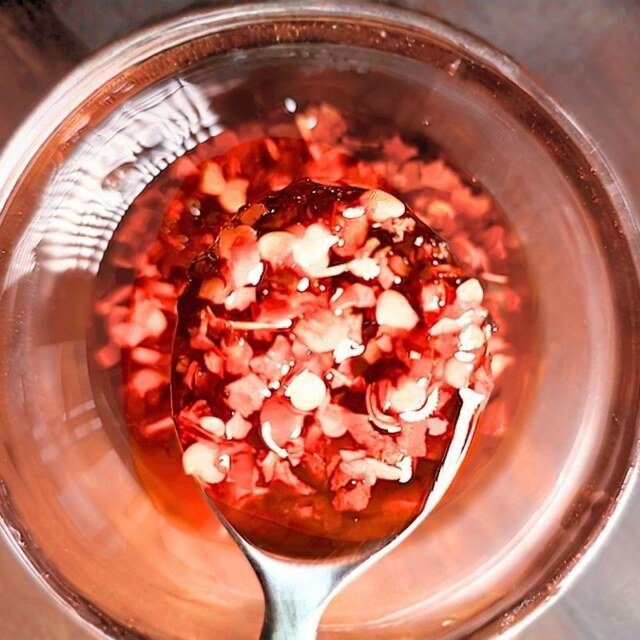
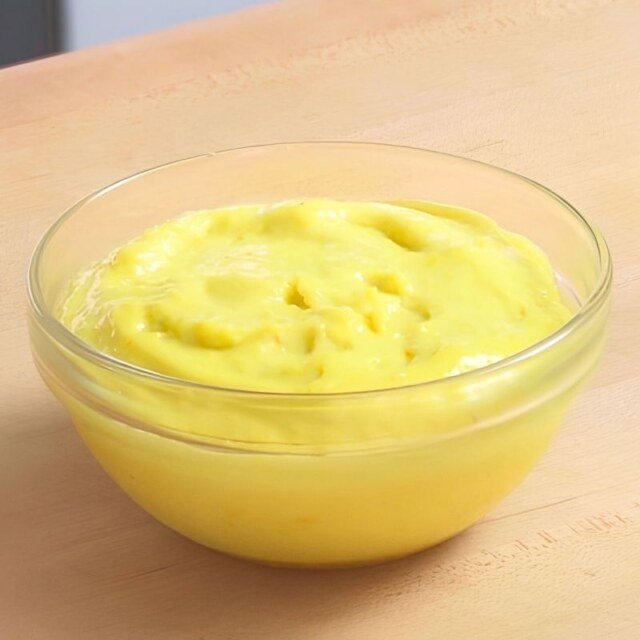
Start with three large garlic cloves. Trim off the root end, halve each clove top to tail, and peel: this is the same fool-proof peeling method taught in professional kitchens, and it works every time. Slice the garlic finely, then go over it again with the flat of your knife, smearing it into the board with a pinch of salt acting as an abrasive, until it’s a smooth puree. A microplane gets you there in a tenth of the time if you’d rather skip the knife work. Either way, drop the puree into a bowl with two tablespoons of red wine vinegar and the juice of half a lime, or a tablespoon of lemon juice: the acid takes the raw edge off the garlic and mellows it before it ever meets the herbs. It’s the same trick behind my easy saffron aioli, where the garlic sits in acid before anything else goes in.
Fresh Parsley and Oregano: Why a Sharp Knife Matters
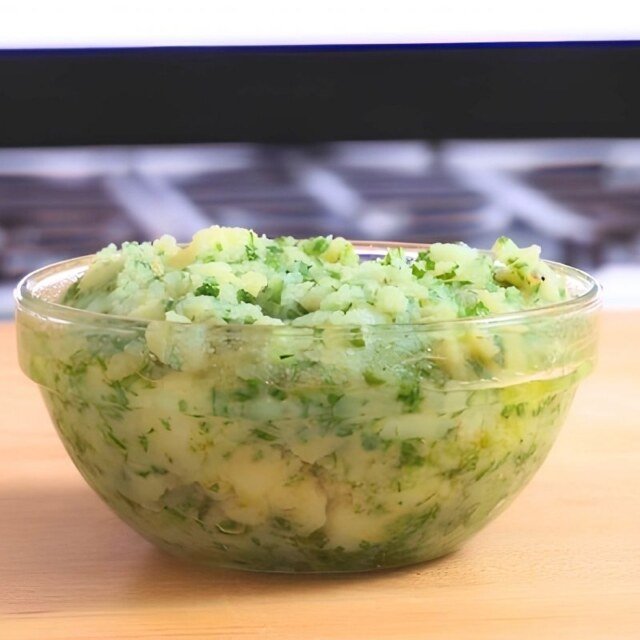
Chop two handfuls of flat-leaf parsley into a fine chop, keeping a few of the younger top stalks in: they’re tender enough to use. A sharp knife isn’t optional here: a blunt one bruises the leaves instead of cutting them cleanly, and you end up with a wet herb sludge instead of distinct, fragrant pieces. Tabbouleh is the one exception, and in my parsley-packed tabbouleh salad a little bruising actually helps. Pick the leaves from a small bunch of fresh oregano and chop them once, gently: oregano bruises even more easily than parsley, so this is one herb you don’t want to go over twice. Dried oregano works as a substitute if fresh isn’t available.
Green Onions and Chilli: Building the Heat and Bite
Finely dice the green tops of your spring onions, then halve the white bulbs lengthways so they sit flat and dice those too. Red chilli is traditional here, though a green serrano works just as well: split it open, run your knife along the inside to strip out the ribs and seeds, then cut it into fine matchsticks before dicing across into a brunoise. Cutting the chilli this small matters: big chunks give you unpredictable bursts of heat, where a fine, even dice spreads it evenly through the whole sauce.
Getting the Oil Balance Right
Season the mixture with around a teaspoon each of salt and pepper, then start building the oil. Extra virgin olive oil gives the best flavour, but on its own at this volume it turns bitter and heavy: half a cup, or 125ml, cut with an equal amount of a neutral oil like vegetable oil keeps the sauce rounded instead of sharp. Balancing oils like this is one of the key steps in my salad dressing framework. Mix it together and check the texture: you want it loose enough to run off a spoon, not thick and gloopy. If it’s too thick, loosen it with a little more neutral oil.
What to Serve With This Chimichurri
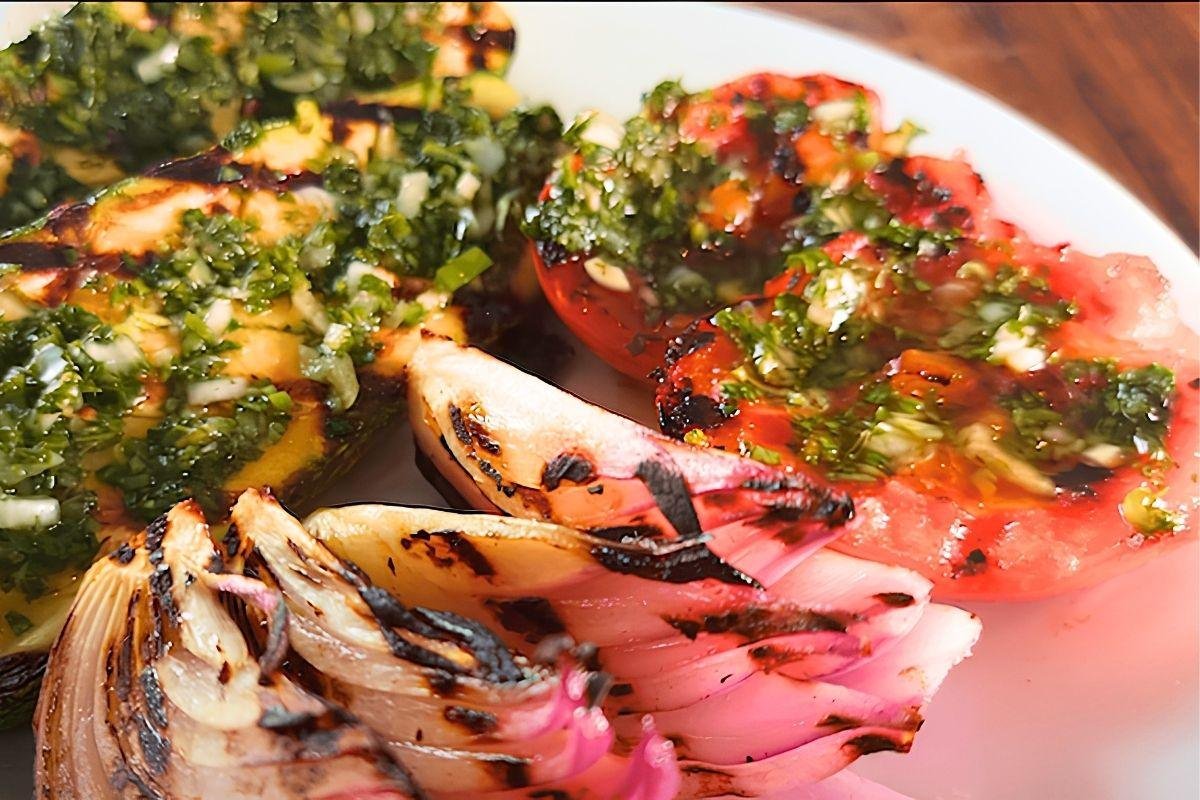
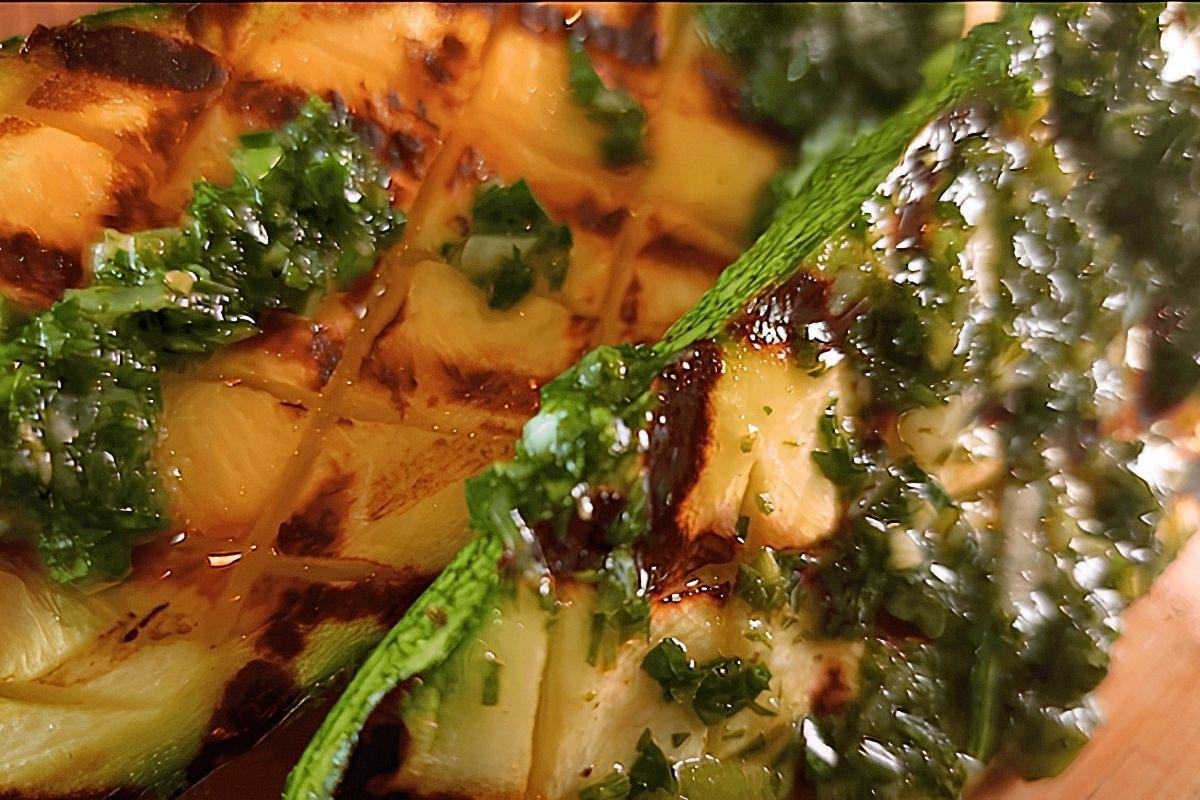
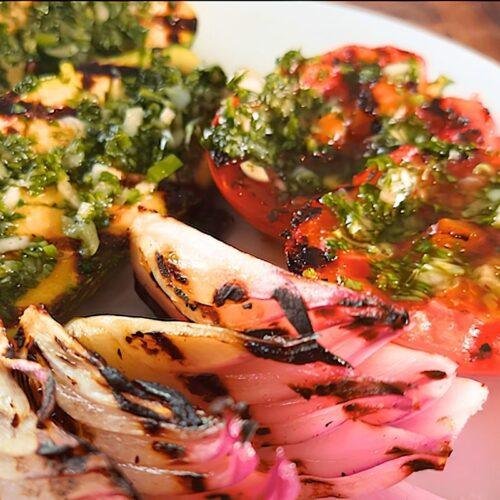
Taste and adjust before serving: a touch more lime if it needs lifting, more salt if it’s flat. Spoon it generously over grilled meat or vegetables; the acidity and heat cut straight through anything charred or rich, which is exactly why this is the sauce I reach for most at the grill. It’s also the dressing for the grilled courgette boats in my grilled courgettes with chimichurri. Don’t be afraid to adjust the seasoning and oil to your own taste: chimichurri is a sauce built for personal preference. Any leftover herbs can go straight into a freezer-friendly compound butter.
How Long Does Chimichurri Last?
Chimichurri keeps for up to 5 days in the fridge, but it gradually loses its fresh, zingy flavours, so the sooner you use it, the better it tastes.
Frequently Asked Questions
What is chimichurri sauce made of?
Chimichurri is made from finely chopped garlic, flat-leaf parsley, oregano, spring onions and chilli, mixed with red wine vinegar, lime juice, salt, pepper and a blend of extra virgin olive oil and a neutral oil. This version uses a green serrano chilli, though red is traditional.
Why add salt when making the garlic puree?
Salt acts as an abrasive when you smear the chopped garlic into the board with the flat of your knife, helping break it down into a smooth, fine puree. If you use a microplane instead, add the salt afterwards since the microplane won’t need it to work.
What’s the quickest way to make garlic puree for chimichurri?
A microplane grater gives a smooth, consistent garlic puree in a fraction of the time it takes to hand-chop and smear garlic with a knife, with no loss of flavour.
Should I use fresh or dried chilli in chimichurri?
Fresh chilli is preferable, both for its flavour and for the texture it adds, but dried chilli works as a substitute if that’s what you have. Traditionally red chilli is used, though green chillies like serrano work well too.
Why is my chimichurri bitter?
Using extra virgin olive oil on its own is one cause: at this volume it turns bitter and heavy. Cutting it with an equal amount of a neutral oil, like vegetable oil, mellows it and keeps the sauce rounded and pourable.
How do you use chimichurri sauce?
Spoon it over grilled steak, other grilled meats or grilled vegetables. Its bright, herby acidity cuts through rich, charred flavours particularly well.
Chimichurri Recipe: Fresh Herb Sauce for Steak and Grilling
Equipment
- Mixing bowl / Bowl
- Barbecue / Outdoor grill
- Chef’s knife
- Chopping board
- Measuring cups
- Measuring spoons
- Citrus juicer
- Spoon (table, dessert, tea)
Ingredients
- 3 large cloves of garlic
- 2 x tablespoons red wine vinegar
- Juice of 1/2 a lime or 1 tablespoon lemon juice
- 2 x handfuls flat leaf parsley around 1 cup when chopped
- 2/3 x green onions/scallions/spring onions
- 3 x stems fresh oregano level TSP dried oregano
- 1 x serrano chilli use what is available to you
- 125 ml or 1/2 cup extra virgin olive oil
- 125 ml or 1/2 cup vegetable/sunflower/canola oil all other neutral tasting oils work as well
- Salt
- Black pepper
Instructions
- Begin by preparing the garlic: trim the root end, halve the cloves, peel, then slice finely and smear with the flat of your knife and a pinch of salt into a smooth puree, or grate it on a microplane.
- In a bowl, mix the garlic with 2 tablespoons of red wine vinegar and the juice of half a lime or lemon.
- Add two handfuls of finely chopped parsley, the finely diced green onions, the finely chopped fresh oregano and the finely diced chilli.
- Season with around a teaspoon each of salt and pepper, then mix in 125 ml (1/2 cup) of extra virgin olive oil and 125 ml (1/2 cup) of neutral oil, adding a dash more neutral oil if it is too thick. Taste and adjust the seasoning and lime.
- Allow the chimichurri to sit for at least 30 minutes for the flavours to meld before serving.
Video
Nutrition
Nutrition Facts
| Total Fat | 23.1g |
| Saturated Fat | 2.4g |
| Cholesterol | 0.0mg |
| Sodium | 238.7mg |
| Total Carbohydrate | 1.4g |
| Dietary Fiber | 0.5g |
| Sugars | 0.2g |
| Protein | 0.4g |
| Potassium | 61.0mg |