
Homemade Ricotta Recipe: 3 Ingredients, No Cheesecloth
Last updated on October 16th, 2026
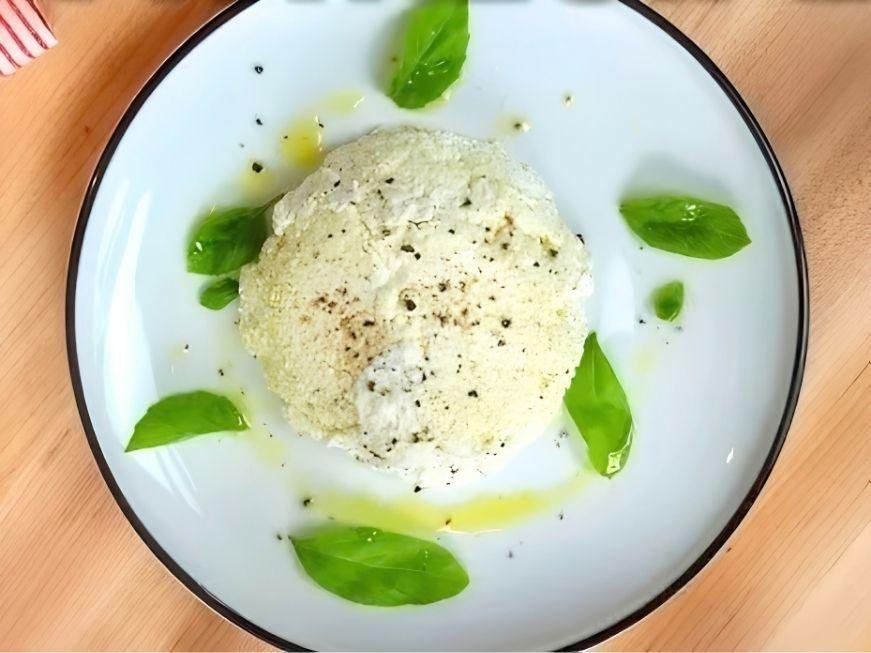
Store-bought ricotta is fine, but homemade ricotta is genuinely better. It is fresher, tangier, and made with three things you almost certainly already have: whole milk, salt and an acid such as white vinegar or lemon juice. This ricotta recipe takes about 50 minutes, most of it hands-off, and once you’ve made it once you’ll wonder why you ever bought the tub. If you like making staples at home, my smooth homemade oat milk is another one that’ll save you money.

Why Homemade Ricotta Actually Tastes Different
The difference comes down to freshness and control. This is warm milk curdled gently with acid and strained within the hour, with no stabilisers and no preservatives, and you decide exactly how much salt goes in. You also control the texture, from soft and spoonable to something firm enough to slice. A firmer ricotta crumbles beautifully over my courgette and sunflower seed salad.
It’s also a fraction of the cost of an equivalent tub from the shop, especially if you’re making a full batch. It’s exactly what I use in my oven-baked ricotta pasta.
It’s worth making a full batch even if a recipe only calls for a spoonful: fresh ricotta like this disappears fast, whether that’s stirred into pasta, spread on toast, spooned into cannoli, or dolloped over a pizza base before it goes in the oven. It’s also the star of the lemon sauce for my homemade spinach cavatelli.
How to Make Homemade Ricotta: Heat, Curdle, Strain
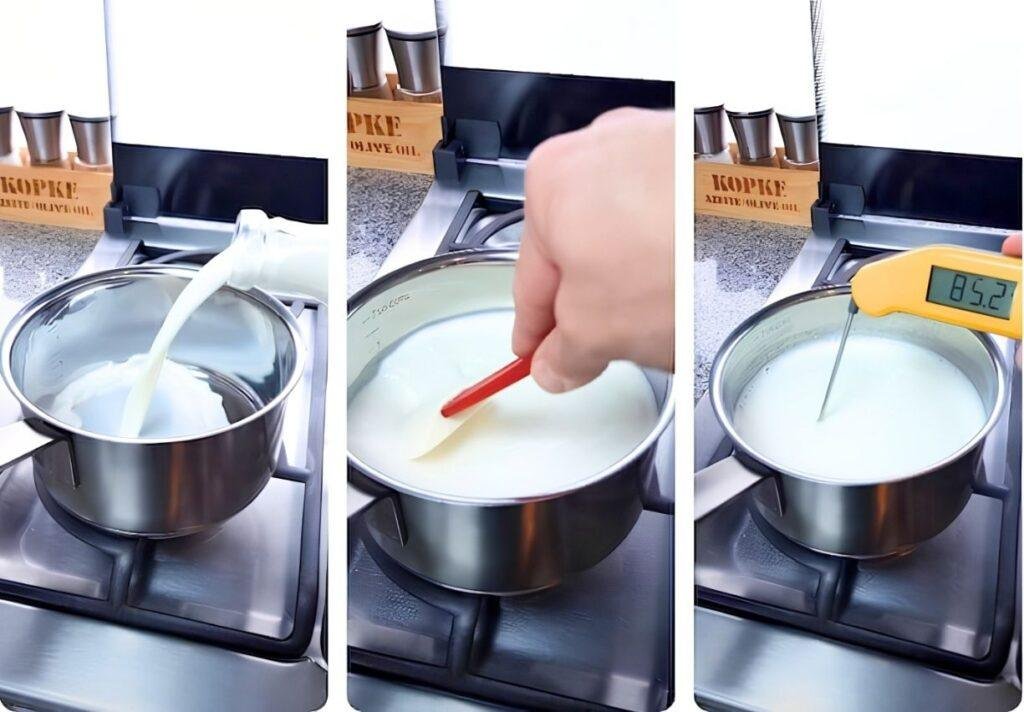
Pour 1 litre (4 cups) of whole milk into a small saucepan and heat it over a medium-low heat, stirring occasionally, until it reaches 85°C/185°F. If you don’t have a thermometer, watch for small bubbles forming around the edge of the pan and steam starting to rise off the surface. That heat, combined with the acid you’re about to add, is what makes the milk proteins separate cleanly into curds and whey. Turn the heat as low as it will go, stir in a pinch of salt and 1.5 tablespoons of white distilled vinegar (any acid, such as lemon juice, will do), then very gently agitate the milk for two minutes, moving your spatula from the edge of the pan to the centre. Be gentle, because stirring too roughly breaks up the curds and you’ll end up with a grainier result. Turn off the heat, cover, and leave it to sit for 20 minutes before straining.

Straining Homemade Ricotta Without Cheesecloth
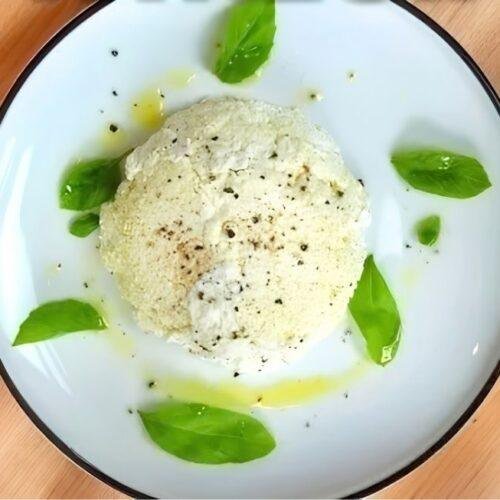
You don’t need cheesecloth for this. As long as you were gentle while stirring, a fine mesh strainer works well. Carefully pour the curds and whey through it rather than ladling them out, since a ladle can break the curds, then leave to drain for 5 minutes for a soft, spoonable ricotta or up to 20 minutes for a firmer result. Give it a gentle press to shape it if you like, though this step is entirely optional. Discard the whey or save it for another recipe. I haven’t found a use for it that I like yet, so let me know in the comments if you have a good one. Serve with freshly cracked black pepper, flaky sea salt and a drizzle of extra virgin olive oil. Spread it on toast and top it with a few Provençal-style garlic tomatoes for an easy lunch.

What temperature should the milk reach when making ricotta?
Heat it to around 85°C/185°F. Without a thermometer, watch for small bubbles forming around the edge of the pan and steam starting to rise off the surface. That’s your cue.
Do I need cheesecloth to make homemade ricotta?
No. As long as you were gentle while stirring the curds, a fine mesh strainer works just as well for straining out the whey.
Can I make homemade ricotta with vinegar?
Yes. I use 1.5 tablespoons of white distilled vinegar for 1 litre of milk, and any acid, such as lemon juice, will also work.
How long does homemade ricotta last?
Stored in an airtight container in the fridge, homemade ricotta keeps well for around 4-5 days. It doesn’t freeze well, as the texture becomes grainy once thawed.
Why is my homemade ricotta grainy?
This usually means the curds were stirred too roughly while forming, or the milk was heated too far past 85°C. Keep the heat gentle and the agitation light for the smoothest texture.
Homemade Ricotta Recipe: 3 Ingredients, No Cheesecloth
Equipment
- Cheesecloth / Nut milk bag
- Mixing bowl / Bowl
- Strainer / Sieve
- Measuring jug
- Measuring spoons
- Saucepan
- Plate / Tray
- Lid
- Ladle / Skimming spoon
- Spatula (silicone, general)
Ingredients
- Makes 245g of ricotta
- 1 litre or 4 cups whole milk
- Pinch of salt
- 1.5 tablespoons 23ml white distilled vinegar (this could be any acid like lemon juice)
Instructions
- Place a small saucepan on the stovetop and add 1 litre (4 cups) of whole milk.
- Turn the heat under the saucepan to medium-low and stir occasionally until the milk reaches 85°C (185°F).
- Turn the heat as low as it will go, then add a pinch of salt and 1.5 tablespoons of white distilled vinegar.
- Gently agitate the milk for 2 minutes by moving your spatula from the edge of the pan to the centre, being careful not to break the curds too much.
- Turn off the heat, place a lid on the saucepan and let it sit for 20 minutes.
- After 20 minutes, carefully pour the curds and whey through a strainer. Leave to drain for 5 minutes for a soft ricotta or 20 minutes for a more firm ricotta.
- Discard the whey or save it for another recipe.
- Optional: Give the ricotta a gentle press to shape it slightly.
- Turn out the ricotta onto a plate and season with freshly cracked black pepper, flaky sea salt, and extra virgin olive oil.
- Enjoy your fresh homemade ricotta cheese.
Video
Nutrition
Nutrition Facts
| Total Fat | 4.2g |
| Saturated Fat | 2.6g |
| Cholesterol | 20mg |
| Sodium | 45mg |
| Total Carbohydrate | 3.0g |
| Dietary Fiber | 0g |
| Sugars | 0.1g |
| Protein | 3.1g |
| Potassium | 89mg |

Hello Chef. I like the web site and videos: great stories and production!
This recipe shows clear instructions for making a basic curd and demystifies home cheese making. But it ain’t Ricotta! Ricotta comes from the Italian word for re-cooked: after the first cheese is created (through acidic coagulation or using rennet) the whey is left to mature/become more acidic and is then re-heated. At this point a new curd forms but with a much lower yield (only a couple of % of the original curd). So it needs a huge quantity of ‘waste whey’ Originally it is a by-product of cheese production. In fairness, because it is not a controlled name, many industrial cheeses are anything but true ricotta!
Hey, yes I agree it’s not technically a ricotta. I made this video/recipe for people (like me) who live in places where getting fresh ricotta is nearly impossible.
To end up with 250g of cheese and to make this the proper way using just whey, they would need 10-20-30 litres of whey, which most people don’t have sitting around, like you mentioned.
So this is the next best alternative. Also, I’ve spent some time in Italy and eaten ricotta in various forms and the fresh, soft ricotta I’ve eaten there is very close to this outcome.
I appreciate your eye for the details and wanting a recipe to be the true thing! On this occasion I was happy bending the rules slightly to get an almost equal result. Thanks for your feedback