How to Butcher A Chicken (And Every Other Type Of Bird)
Last updated on October 13th, 2026
Learning how to butcher a chicken properly is one of the most useful two minutes you can spend in a kitchen: it works out cheaper than buying pieces, and once you’ve done it a handful of times, the exact same method breaks down turkey, duck, pheasant or pretty much any bird that lands on your board. Once you’ve mastered it on a duck, cook the breasts with my 666 rule for crispy duck.
The Best Knife For Butchering A Chicken
You don’t need a full knife roll for this, just one knife you’re comfortable with. My own boning knife was gifted to me 18 years ago when I started my first full-time job in a kitchen, but I use a paring knife in the video to show you don’t need specialist kit. Here are the three that work:
- Traditional Boning Knife: With its thin, rigid blade, this knife is perfect for any butchering task and the top choice for most professionals.
- Filleting Knife: This knife has a flexible, thin blade, making it ideal for delicate work.
- Veg Prep or Paring Knife: A slightly thicker, rigid blade knife, which may not be traditional but works just as effectively, as we’ll demonstrate.
Proper Preparation
Set your board up properly before you start: secure it with a grip mat or a damp towel, keep paper towel within reach, and have a tray ready for the pieces as you go. It comes down to the old kitchen rule of proper preparation preventing poor performance. The less you’re touching cupboard handles and dishcloths with raw chicken on your hands, the better.
Removing The Legs And Wings
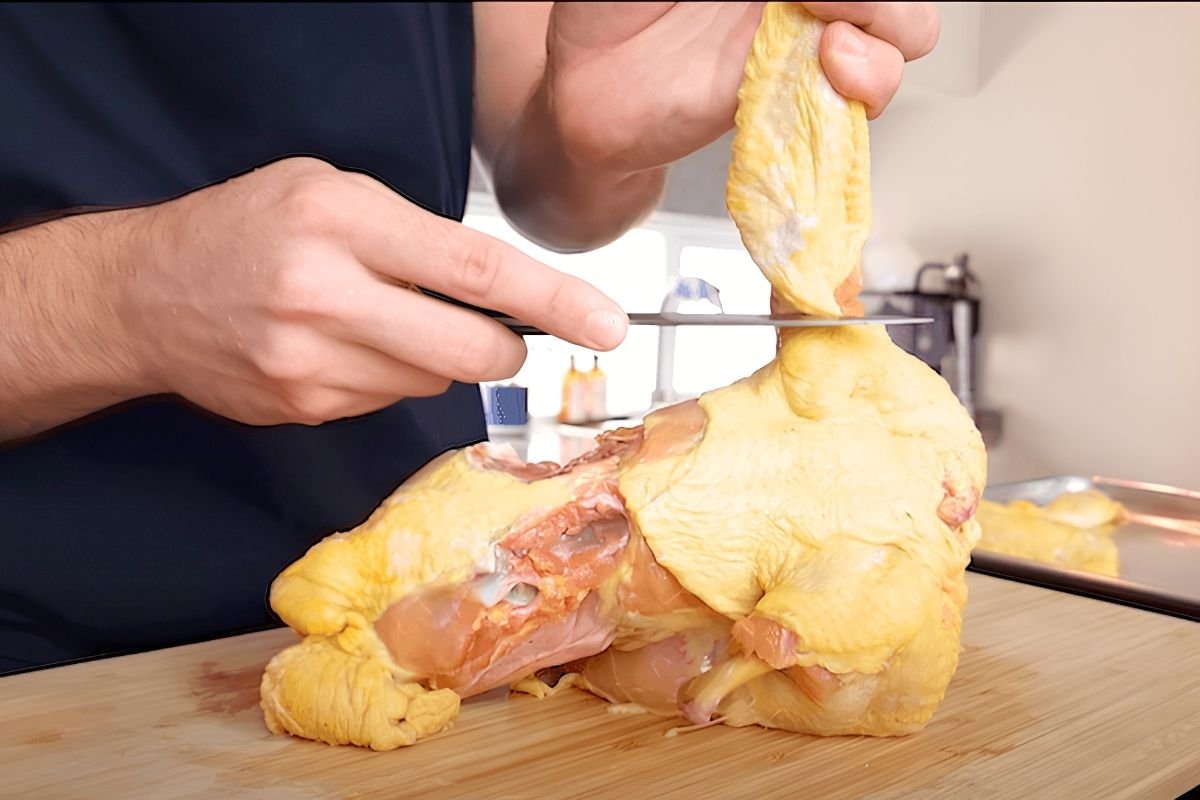
Start with the chicken on its back, legs towards you, wings away. Find the loose skin between the body and the leg, make a small cut, then bend the leg back until it dislocates at the joint. That’s when you’ll spot the oyster, a small piece of meat where the leg meets the body that’s genuinely the most tender part of the whole bird. Carve around it to free the leg, then repeat on the other side. For the wings, hold the bird up by the wing, cut roughly halfway between the body and the first joint, then rotate the bird and keep cutting until your cuts meet before bending the joint back until it comes free. Freeing the wings at the joint like this is also the first step in my tricks for a better roast chicken.
Extracting The Wishbone
The wishbone sits in an upside-down V under the neck skin. Lift the skin, find it by feel, slide your knife tip in behind it, and cut down towards the board until you meet resistance. Repeat on the other side, then pick the bird up by the wishbone and twist until it comes free.
How To Remove The Breast From A Whole Chicken
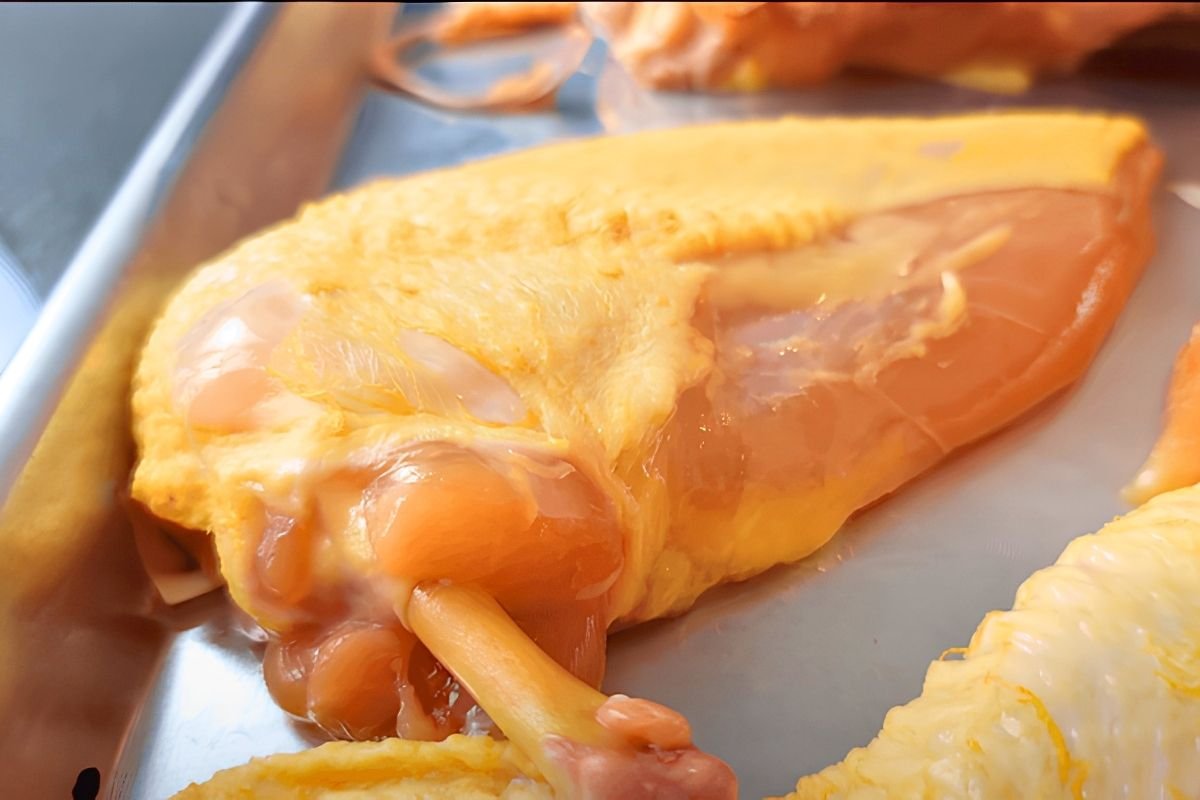
With the sternum, or keel bone, running down the centre of the bird, cut along one side of it from the neck end to the tail, then open the cut and angle your knife to follow the curve of the rib cage. Keep slicing along the ribs until the breast is nearly free, then find the inner wing joint from the inside and slice through it to release the breast completely. Repeat on the other side.
Cleaning Up The Breasts
Pull the tender away from each breast and trim off any loose skin to neaten the shape. There’s usually a white tendon running through the tender. Slice around it to free one end, then grip it with a paper towel and pull it out. Those breasts are perfect butterflied for my five-meal chicken prep in an hour. To clean the bone on a breast, scrape down it to release the cartilage as much as possible, then grip it with a paper towel in one hand, support the other end with your other hand and pull gently but firmly until the bone comes away clean.
Separating The Thighs And Drumsticks
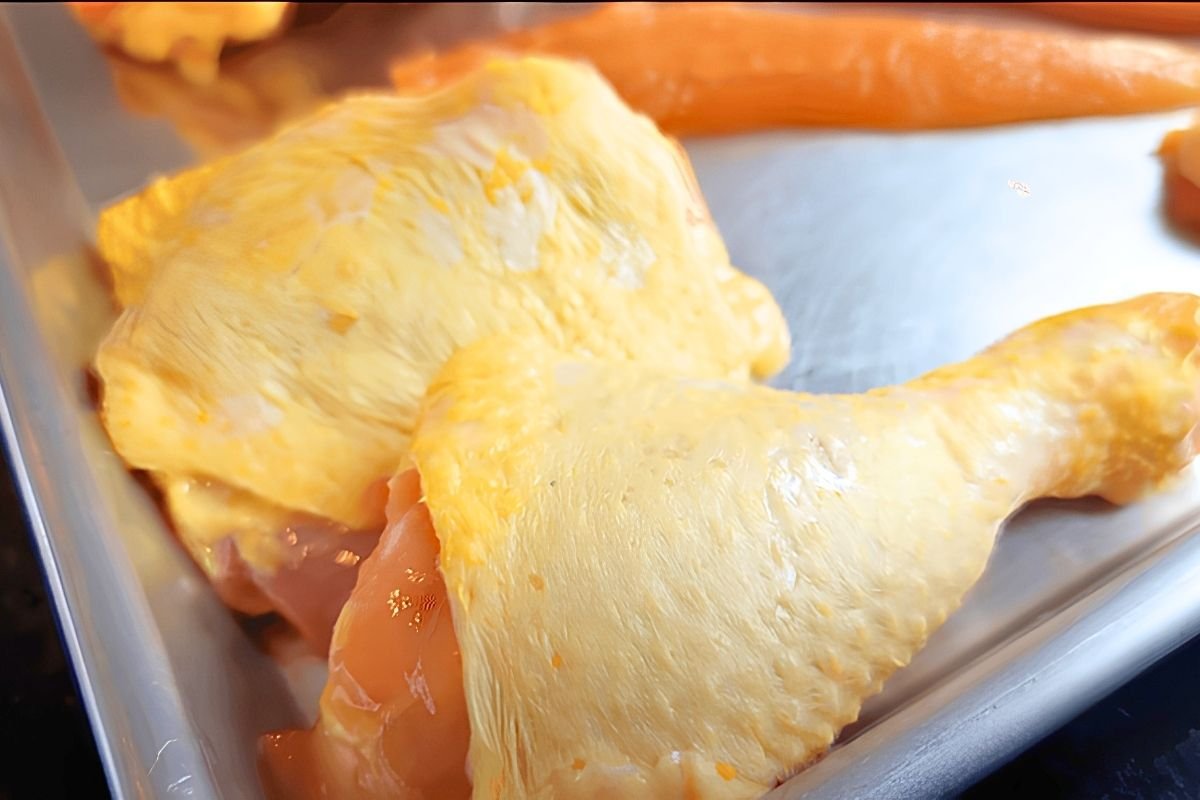
Find the knee joint between the thigh and drumstick and cut straight through it to separate the two, then trim away any excess skin. Thighs are my go-to for oven-baked chicken tikka, where their fat keeps the meat juicy.
Using Every Part Of The Bird
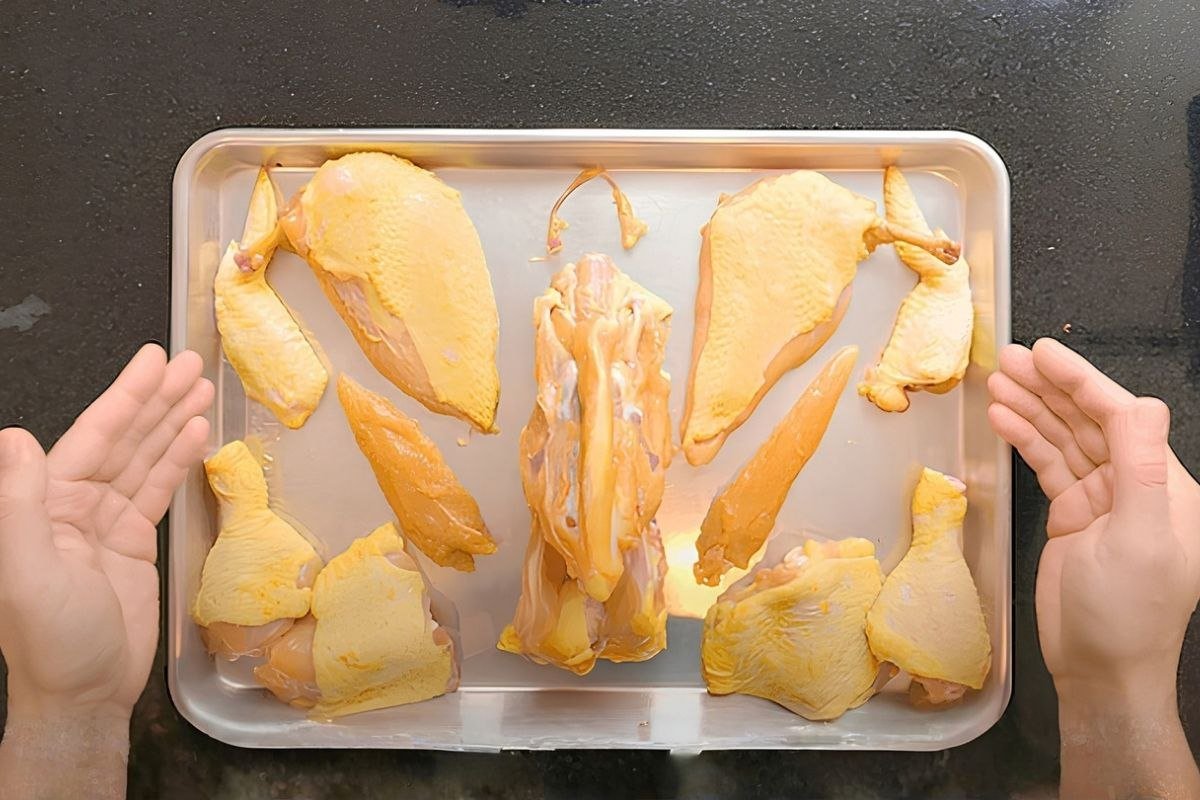
Nothing here needs to go to waste. The carcass, wishbone and wings make a genuinely good stock, and the breasts, thighs, drumsticks and tenders are ready for whatever you’re cooking next. The carcass is also the base for the stock in my chicken noodle soup recipe.
Once you’ve done this a few times, the whole thing genuinely takes under two minutes, and it’s the exact same method whether you’re breaking down a Sunday chicken, a Christmas turkey or anything else with wings. The breasts are ready to go straight into my easy pan-seared chicken breast. The video below walks through the whole process if you want to see it in action.
What’s the best knife for butchering a chicken?
A boning knife is the traditional first choice thanks to its thin, rigid blade, though a filleting knife or even a regular paring knife will do the job just as well. You don’t need specialist equipment to get a professional result.
What is the ‘oyster’ on a chicken?
The oyster is a small, tender piece of meat found where the leg joins the body, often considered the most succulent and flavourful part of the whole bird, and it comes away with the leg when you butcher it correctly.
Can this butchery method be used on other birds?
Yes. The same technique applies to turkey, duck, pheasant, goose, guinea fowl, or virtually any bird, with practice letting you break one down in under two minutes.
What should I do with the chicken carcass and wings after butchering?
Don’t throw them away. The main body, wishbone and wings are ideal for making a flavourful stock or soup, so nothing from the bird goes to waste.
How long does it take to butcher a chicken?
Once you’ve practised the method a few times, you can break down a whole chicken, or any other bird, in less than two minutes.
How do you butcher a chicken into 8 pieces?
Take off the two legs, the two wings and the two breasts, then cut each leg through the knee joint to separate the thigh from the drumstick. That gives you eight pieces, plus the tenders from under the breasts, with the carcass and wishbone left over for stock.