Tabbouleh Recipe: Fresh, Herb-Packed Couscous Salad
Last updated on October 17th, 2026
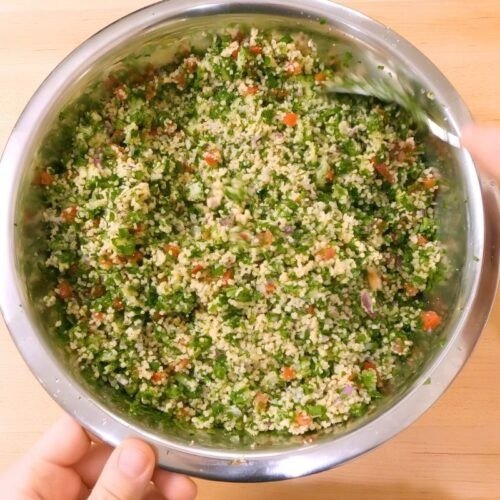
Most tabbouleh recipes go heavy on the grain and light on everything else: mine doesn’t. The rule I stick to is that at least half the bowl should be chopped vegetables and herbs, and mine usually leans further, closer to 60% veg and herbs to 40% couscous. Get the couscous right first: coat every grain in olive oil before you add the water, or the oil just floats to the surface and you’re left with clumpy, uneven grains instead of something light and fluffy. It’s the classic partner for my Lebanese roast lemon chicken.
How to Cook Couscous So It Doesn’t Clump
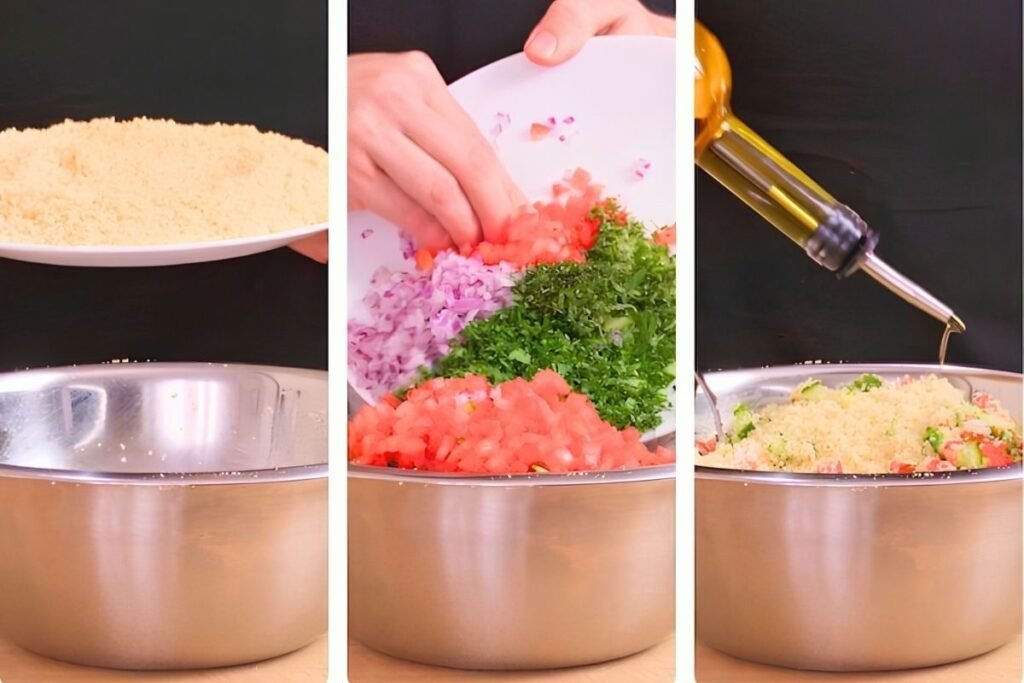
The trick to fluffy, clump-free couscous is coating every grain in oil before the water goes anywhere near it: here’s the method I use. For our couscous, I’m using the quick cook, 5-minute variety. It’s the most common type you’ll find in stores these days, and it works like a charm. To get started, take 300g or 2 cups of couscous and toss it into a mixing bowl. Add a pinch of salt and a generous glug of extra virgin olive oil. Now, make sure you mix it thoroughly, coating each grain with the oil. This step is essential to avoid clumpy couscous after cooking. Trust me, no one wants that!
Next, pour some boiling water over the couscous until it’s sitting just above the surface. Give the bowl a good shake or stir to ensure there are no dry patches. The last thing we want is a mouthful of sandy, uncooked couscous, right? Once that’s done, cover the bowl with a lid and let it steam for a good 20 minutes.
Prepping the Vegetables and Herbs Without a Soggy Salad
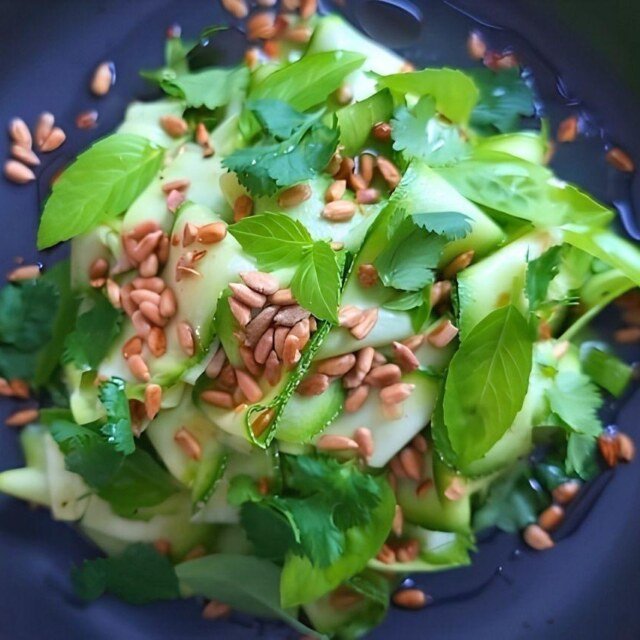
While our couscous is getting all nice and fluffy, let’s move on to the other half of our salad. First up, the cucumber. Slice it in half lengthways and scoop out the seeds. You can save those little seeds for a drink or smoothie if you fancy. Then, slice each half into long thin strips. I like to go pretty fine with this salad, so I usually cut each half into eight strips, but feel free to adjust to your preference.
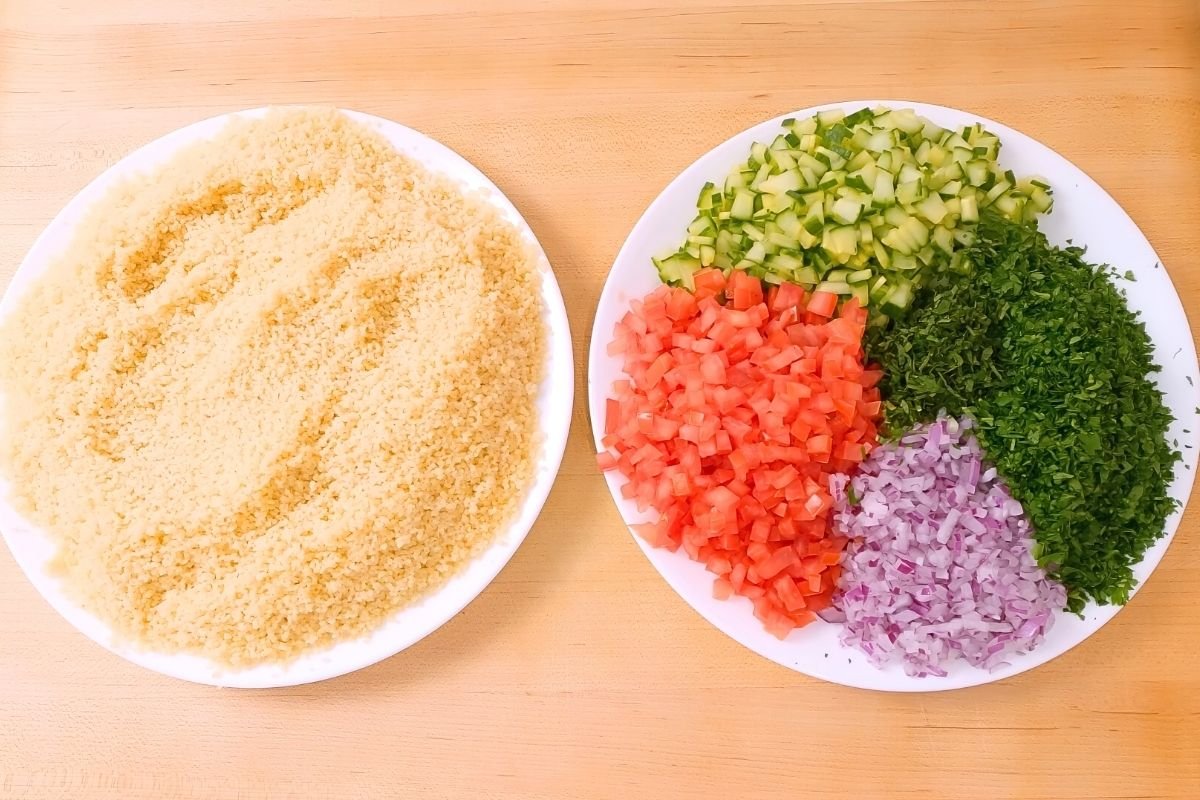
Gather the strips of cucumber and dice them up finely. Now, onto the tomatoes. Grab five Roma tomatoes, quarter them, and remove the seeds. We don’t want too much moisture in our tabbouleh; otherwise, it’ll become all soggy. It’s the same moisture control I use for my Greek salad plated like a starter. Slice the tomatoes into strips and then chop them up into a fine dice, similar to the cucumber.
Now, let’s tackle the onion. Take one medium red onion, peel off the papery layer and the first layer of flesh. That part is generally dry and leathery, so it’s best reserved for a stock. Save that trim for a fridge-raid vegetable stock rather than the bin. Dice the onion finely, matching the size of the cucumber and tomato pieces.
How to Cut Parsley for Tabbouleh
Next up, the herbs. I prefer curly parsley for this because it holds up better when it’s chopped this heavily, but flat-leaf works fine too. Take the leaves off the woody stems; a few of the younger top stems close to the leaves can stay in. Split the parsley into manageable bunches and roll each one up tightly into a parsley cigar, and scoot any stragglers round the back. Pinch the cigar with two or three fingers and slice through it, regripping and gathering loose leaves every few strokes, and keep the blade on the board while you readjust to cut yourself less. Then spin the pile 90 degrees and chop across until it’s as fine as you like. I’ve chopped a ton of parsley in my time, and this is my favourite way to tackle a large bunch. Parsley’s a robust herb, so don’t be shy with it: for tabbouleh, you actually want it a little bruised from chopping, which isn’t something I’d do for other dishes. It’s the opposite of my chimichurri recipe, where a sharp knife keeps the parsley pristine.
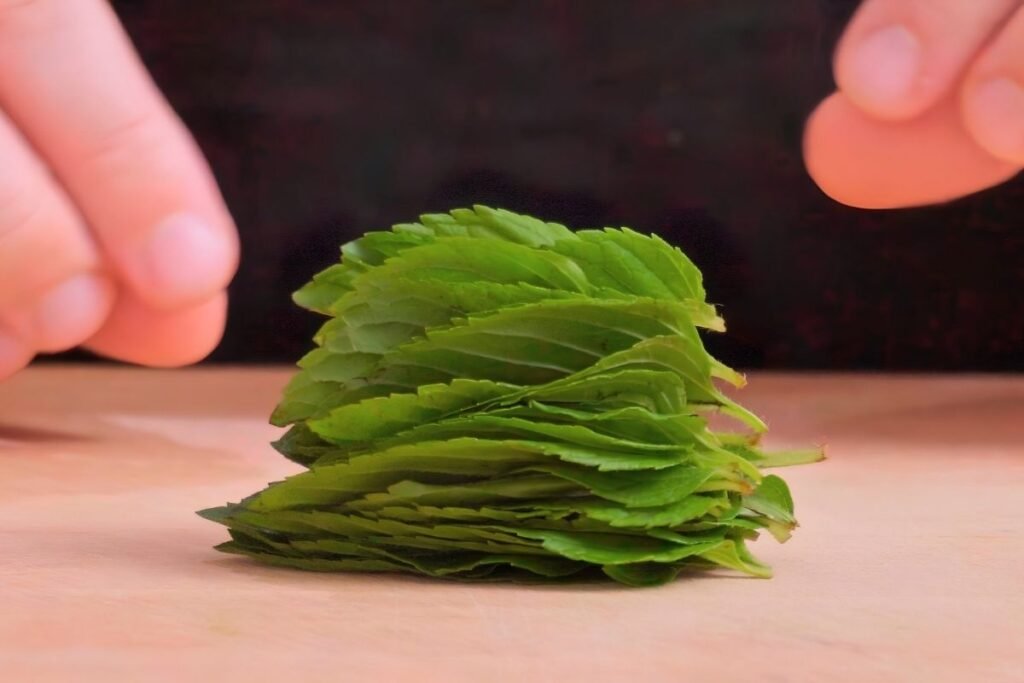
Grab around 30 mint leaves, making sure you remove them from the stalks completely. Pile the mint leaves on top of each other and gently roll them up into a mint cigar. Carefully slice the mint into fine slivers, turning it 90 degrees and chopping some more until it’s just the right size. Chop it close to serving time if you can: mint blackens fast once cut. Want it to stay vibrant longer? Blanch it for 30 seconds in boiling water, then plunge it into ice water: you’ll even get a mild mint tea out of the leftover blanching water as a bonus. It’s the same blanch-and-shock trick that keeps my bright green Brussels sprouts so vibrant.
By this point, our couscous should be ready to go. If you mixed in the oil well before cooking, you should have fluffy, clump-free couscous, just like the kind we want for this salad. Spread it out to cool for a few minutes.
Bringing It Together: Getting the Couscous-to-Veg Ratio Right
Now, let’s bring it all together! A good tabbouleh should be at least half vegetables and herbs, not couscous with a few flecks of herbs in it. Mine leans further, closer to 60% veg and herbs to 40% couscous. Of course, you can always adjust it to suit your taste and preference. If you’d like a dressing on the side, my three simple salad dressings are a great starting point.
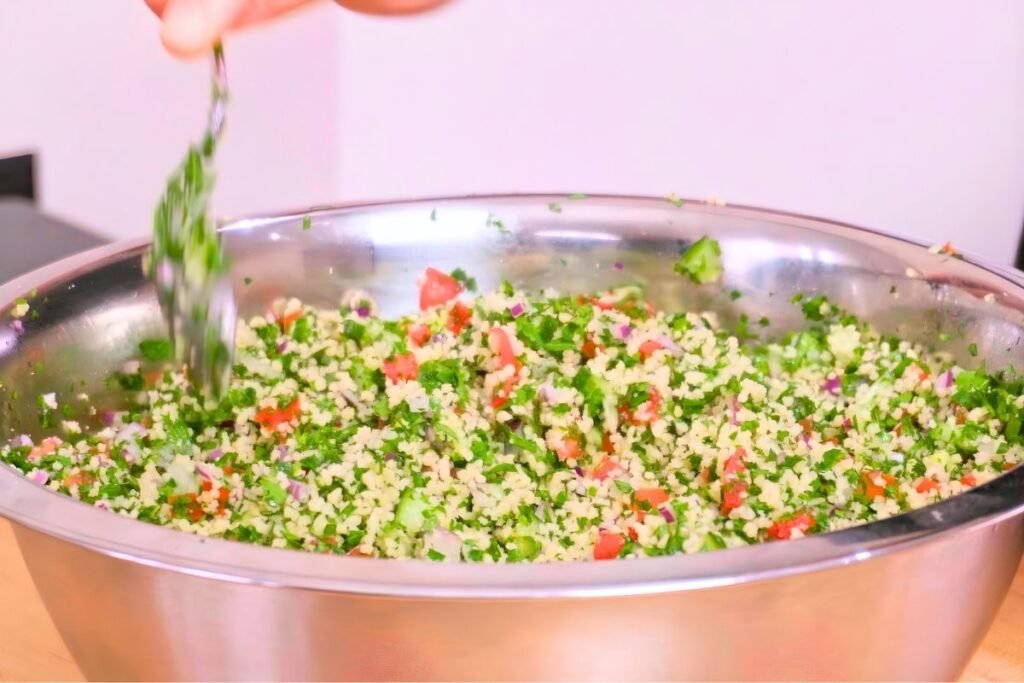
There you have it, folks, a fantastic and versatile tabbouleh salad with couscous. Remember, if couscous isn’t your thing, you can swap in bulgur wheat, millet or quinoa. For a gluten-free tabbouleh, use quinoa or millet, as couscous and bulgur are both wheat. Serve it with warm homemade Greek pita for scooping. So go ahead, get creative, and enjoy your refreshing and scrumptious tabbouleh salad in your style!
How Long Does Tabbouleh Keep in the Fridge?
Tabbouleh keeps in the fridge for 2-3 days. The mint is the first thing to suffer, because it blackens quickly once cut, so chop it close to serving time, or blanch it as above, if you’re making the salad ahead.
Frequently Asked Questions
What is tabbouleh made of?
Tabbouleh is a herb salad: lots of finely chopped parsley and mint, diced cucumber, tomato and red onion, bound with olive oil, lemon juice and salt. I use quick-cook couscous for the grain and keep it to around 40% of the bowl.
What’s the right ratio of couscous to vegetables in tabbouleh?
At least half the bowl should be chopped vegetables and herbs. I lean further, closer to 60% veg and herbs to 40% couscous.
Why do you deseed the cucumber and tomato?
To keep moisture out: seeded veg makes the salad soggy.
How do I stop couscous from clumping?
Coat every grain in olive oil before adding boiling water; skip that step and the oil pools on top instead of coating the grains.
How do I make tabbouleh without couscous?
Swap the couscous for bulgur wheat, millet or quinoa. For a gluten-free tabbouleh, use quinoa or millet, as couscous and bulgur are both wheat.
Tabbouleh Recipe: Fresh, Herb-Packed Couscous Salad
Equipment
- Baking / Roasting tray
- Stick blender
- Mixing bowl / Bowl
- Kettle
- Chef’s knife
- Chopping board
- Paring / Small knife
- Digital scales
- Measuring spoons
- Shot glass / Measure
- Jug
- Plate / Tray
- Serving plate / Platter
- Lid
- Citrus juicer
- Tongs
- Wooden / Stirring spoon
Ingredients
- 300 g / 2 cups couscous could also be bulgur wheat or quinoa
- 1 large bunch of parsley
- 30 mint leaves
- 1 x cucumber
- 1 x medium red onion or 1/2 a large one
- 5 Roma tomatoes
- 1 lemon, juiced plus a little more to taste
- Olive oil
- Salt to taste
Instructions
- Place the couscous in a bowl, add a pinch of salt and a good drizzle of olive oil, and mix well so each grain is coated in oil.
- Pour enough boiling water over the couscous to just cover it. Place a lid on and leave it to sit for 20 minutes.
- Whilst you’re waiting for that to cook, finely chop all the herbs and vegetables. De-seed the cucumber and tomatoes so the tabbouleh doesn’t come out too wet in the end.
- Once the couscous is ready, fluff it up with a fork and let it cool. Add all the chopped vegetables and herbs, then a splash of olive oil, a pinch of salt and the juice of one lemon. Mix well, taste for seasoning, add more salt or lemon juice if needed, and serve.
Video
Nutrition
Nutrition Facts
| Total Fat | 4.8g |
| Saturated Fat | 0.7g |
| Cholesterol | 0.0mg |
| Sodium | 93.2mg |
| Total Carbohydrate | 68.4g |
| Dietary Fiber | 6.3g |
| Sugars | 4.8g |
| Protein | 11.6g |
| Potassium | 563.4mg |