Turkey Gravy Recipe: Make-Ahead From Roasted Bones
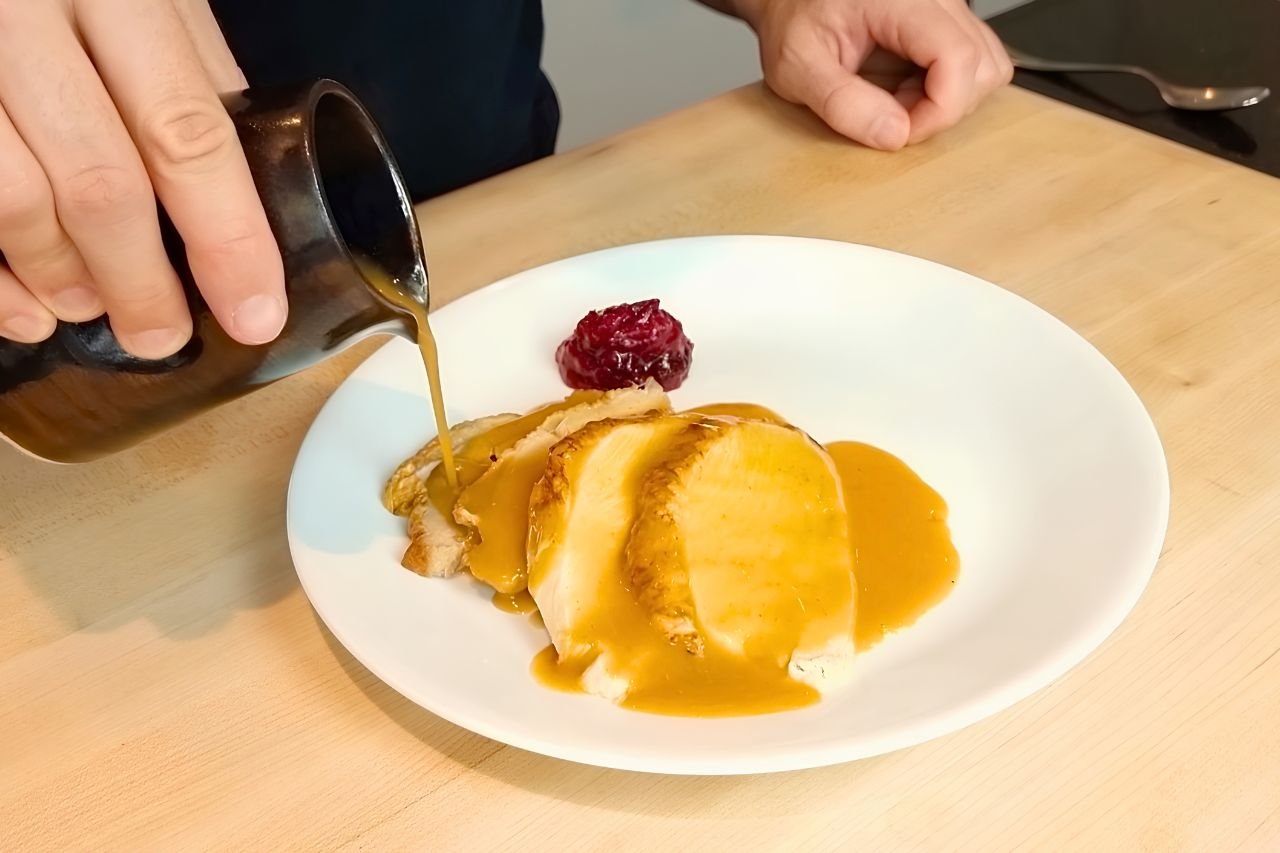
This turkey gravy recipe is built from the bones and trim of the turkey itself, so it has a deep, rich, meaty flavour. You roast the bones hard, cook them into a stock overnight in the oven, then finish the gravy in the roasting tray on Christmas Day with the vegetables, flour and white wine. All of the prep can be done well ahead of time.
Why You’ll Love This Turkey Gravy Recipe
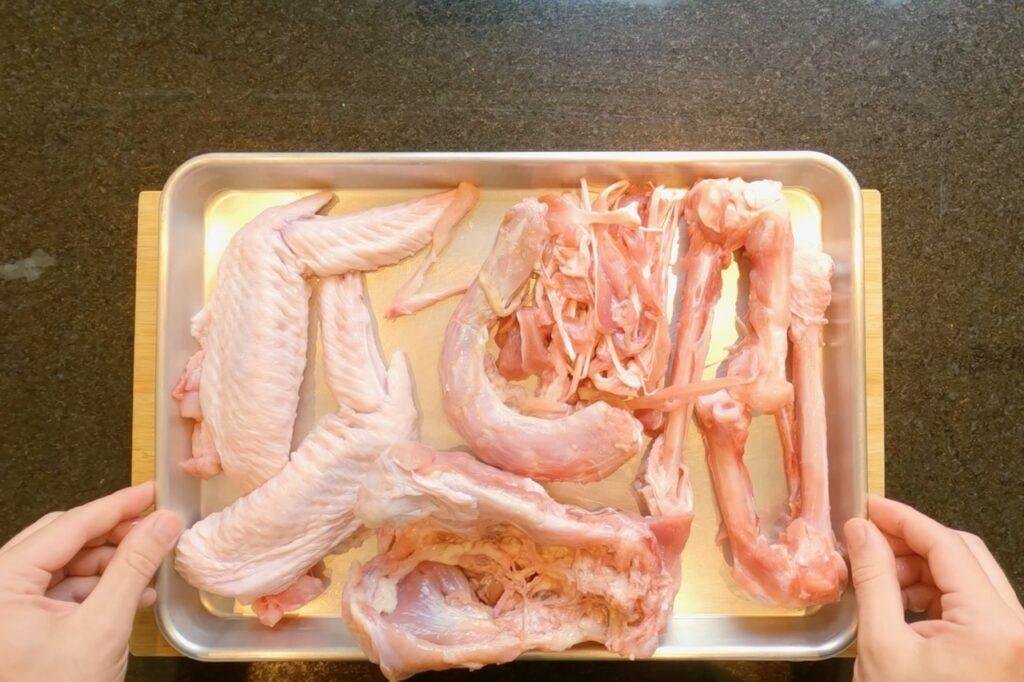
It uses everything left over from butchering the turkey: the main leg bones, the trim and scraps from the leg meat, the wings, the rear part of the carcass, the wishbone and the neck. The bones and trim come from butchering the turkey a few days earlier, and my guide to butchering a chicken and every other type of bird uses the same method for turkey.
The stock is made days ahead and chilled, so on Christmas Day the gravy is finished in the roasting tray while the turkey rests. Once chilled, my stock came out gelatinous, which is a good sign that it is packed full of flavour.
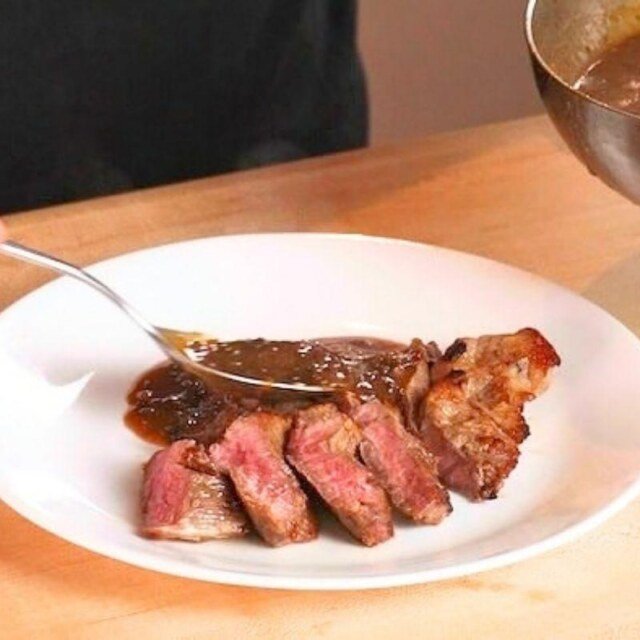
This gravy needs a turkey carcass. If you have no turkey and just want a quick sauce for steak, pork or chicken, my ultimate guide to pan sauces covers all three.
How to Make Homemade Turkey Gravy From Drippings
This makes enough gravy for 12 people.
Get Ahead of Your Prep By Making Ahead
- 2 kg turkey bones and trim (leg bones, trim and scraps from the leg meat, wings, rear part of the carcass, wishbone and neck)
- 4 litres water, in total, including the water used to deglaze the roasting tray
Then On The Big Day The Process Continues
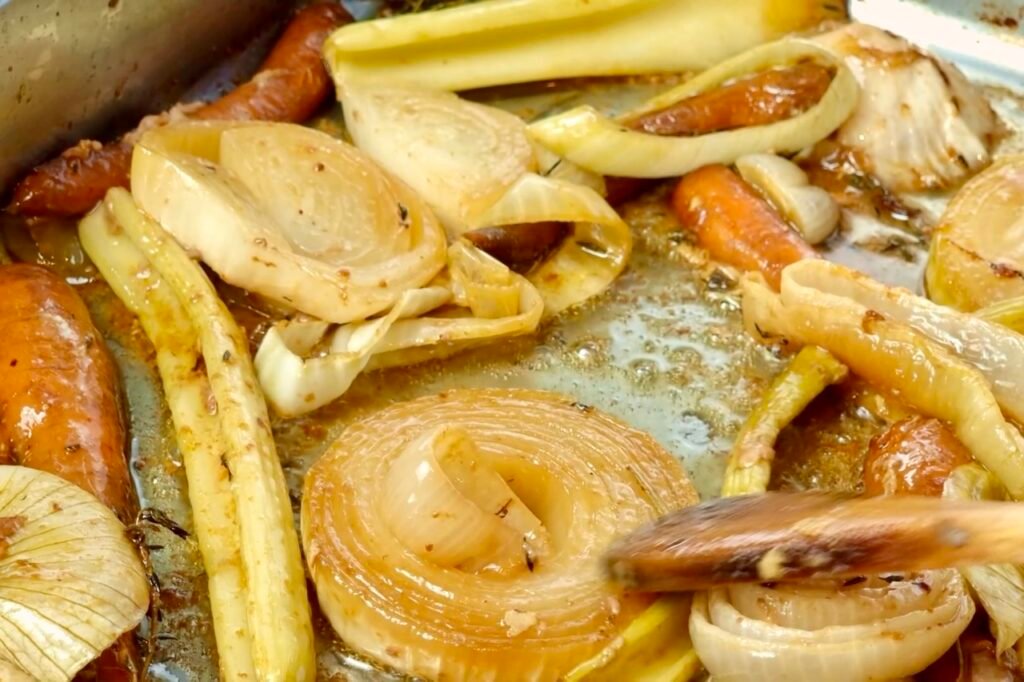
- The trivet of vegetables from roasting your turkey: 2 white onions, 3 carrots, 2 celery sticks, 2 stalks of rosemary and 2 handfuls of thyme
- 2-3 heaped dessert spoons of plain (all-purpose) flour
- 250 ml white wine (red wine also works)
- Salt, to taste
How to Make Turkey Gravy From Scratch
Roast the bones
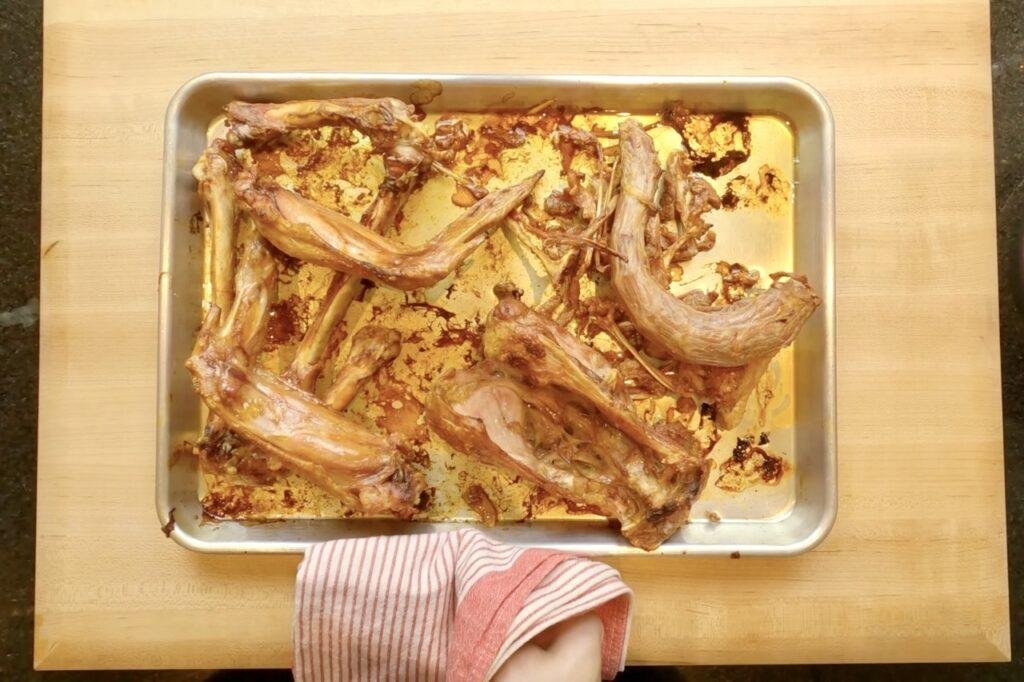
Preheat the oven to 220°C (430°F). Lightly salt the bones. I would not usually do this when making a stock, but I want to start building a strong flavour base for this gravy.
Roast the bones for at least 1 hour, flipping and rotating them a few times, until they are deeply golden brown and smell delicious. Roast them hard. This is where the colour and depth of flavour come from, and if the bones come out under roasted, the gravy will be a weak, off-white beige, like a bad cup of tea.
Make the stock
Load the roasted bones into a large stock pot, cover with cold water and bring it to a boil over a high heat. Drain all of the fat from the roasting tray. Keep the fat from the bone tray for roasting potatoes: my roast potato method works with any variety.
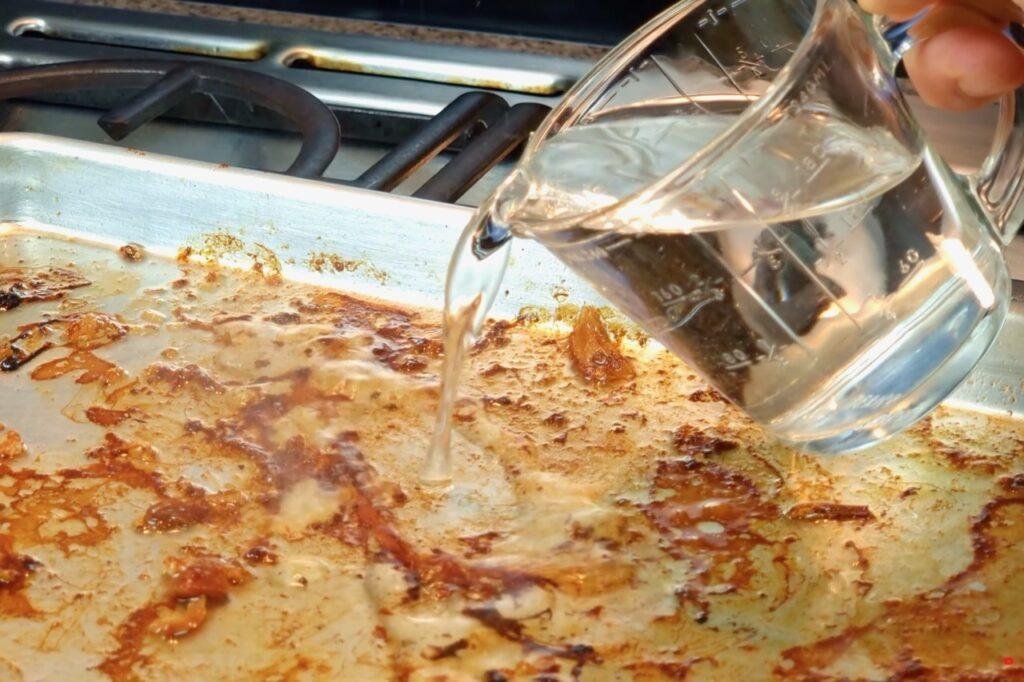
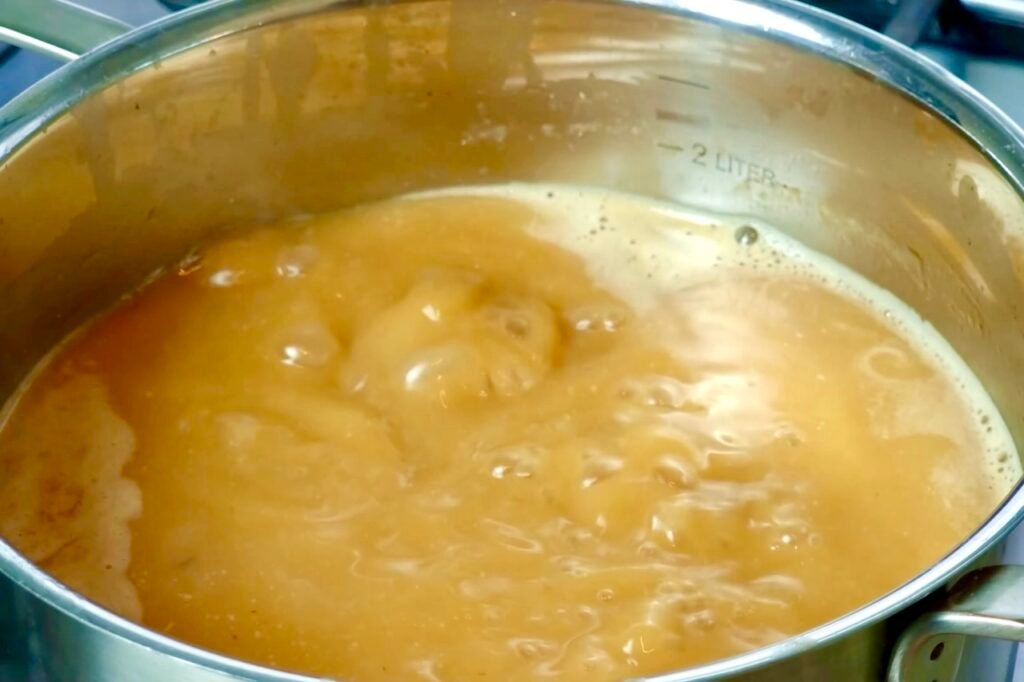
Put the tray on a low heat, because there is a lot of golden fond stuck to it and it needs a little help from the heat to come off. Pour in enough water to cover the tray and scrape all the fond off with a wooden spoon, then add it to the stock pot. You need 4 litres of water in total. Once the pot is boiling, skim off any fat that comes to the surface.
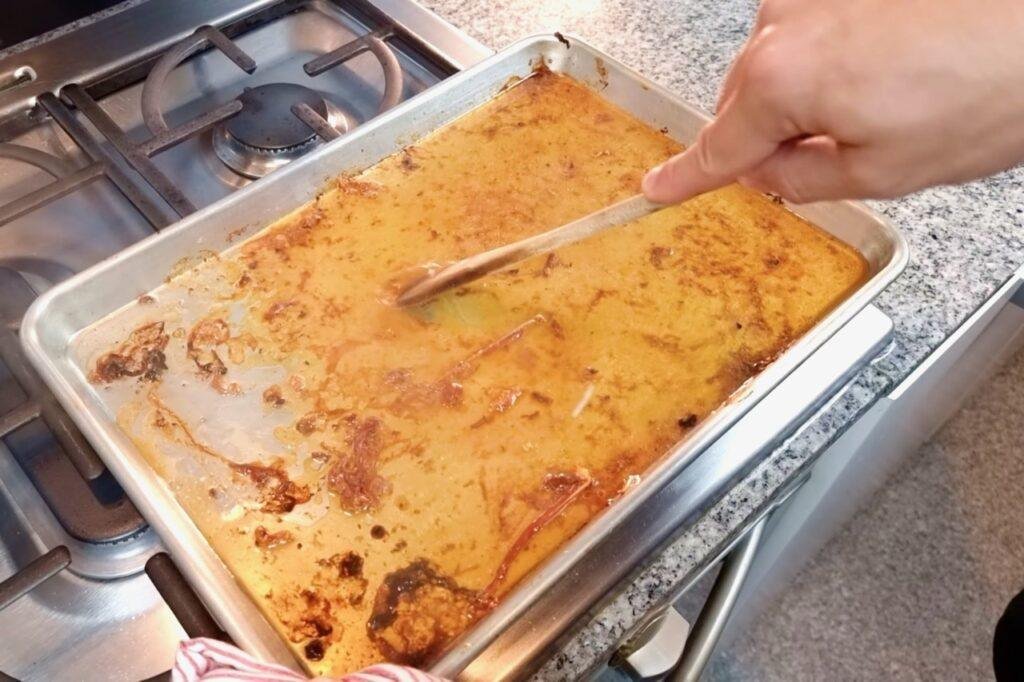
Put an oven-safe lid on the pot and cook it in the oven at 110°C (230°F). I do this overnight for around 8 hours, and the minimum you can get away with is around 4 hours. I like doing it in the oven because it is completely hands off. A pressure cooker or a pan simmering on the stove also works.
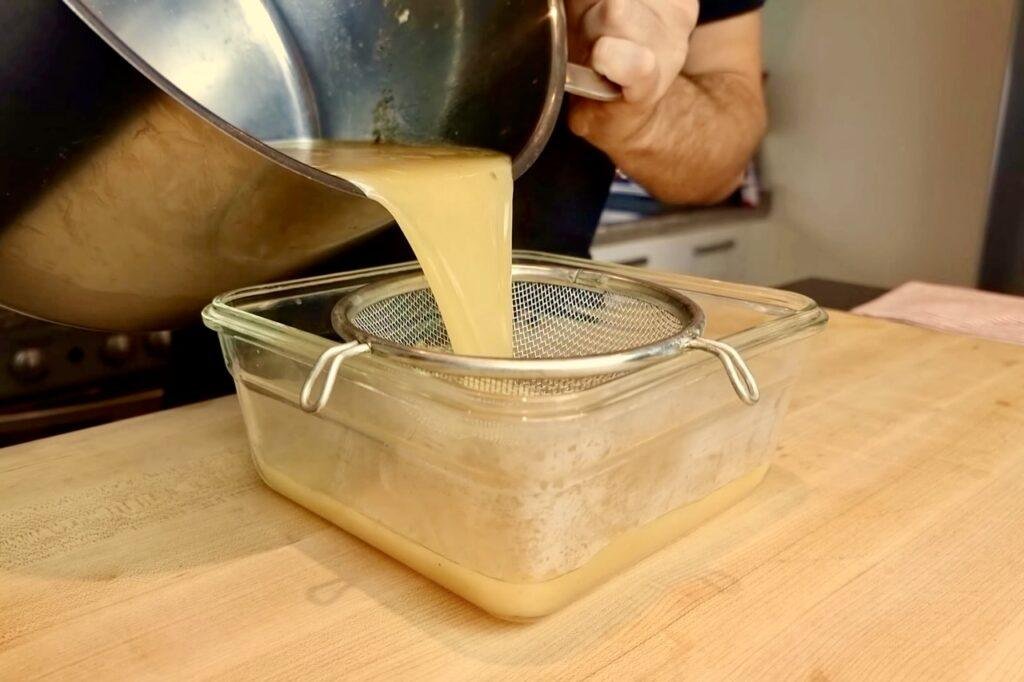
The next morning, scoop the big bits out with a slotted spoon, then pour the stock through a fine mesh strainer to catch any little bits. Leave it to cool, then chill it in the fridge until you need it. I had around 2 litres of stock.
Finish the gravy on Christmas Day or Thanksgiving
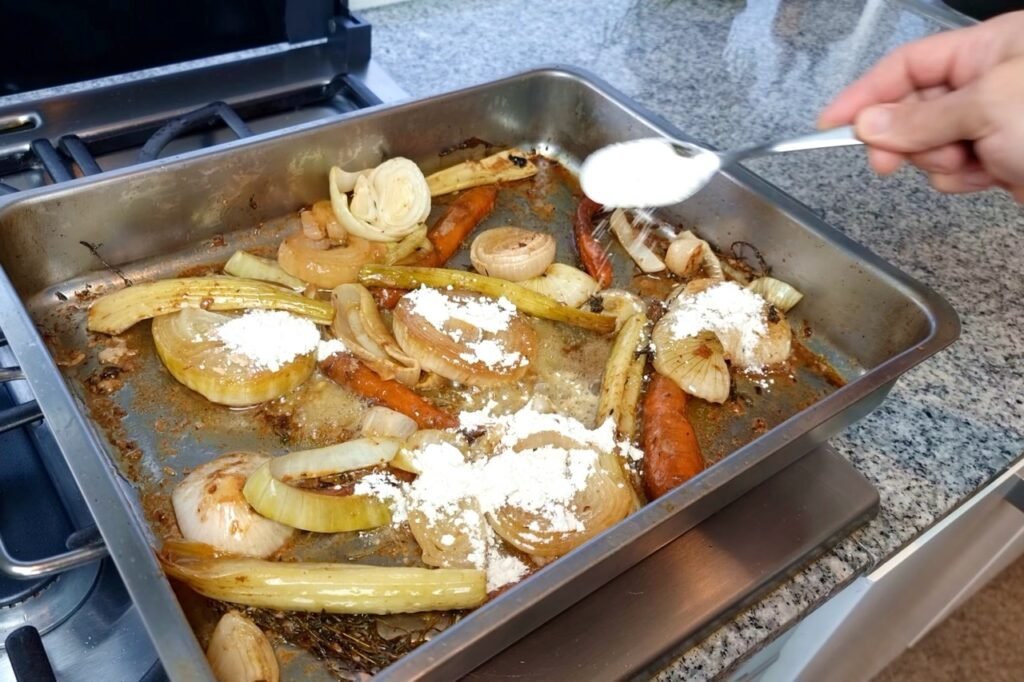
When the turkey comes out of the oven and is resting, put the roasting tray with the vegetables and juices on a low heat. Finishing the gravy starts by deglazing the roasting tray, the same idea I break down in my basic pan sauce method. Scrape up the fond with a wooden spoon and move the tray around so it heats in different parts.
Once most of the liquid has evaporated and the vegetables sound like they are starting to fry, add the flour and fry it gently, stirring, for 2 minutes to form a roux. Add the white wine and stir until there are no lumps remaining. Then add all of the stock and bring the gravy up to a simmer, stirring occasionally. Simmer for 10 minutes to extract the flavour from the vegetables.
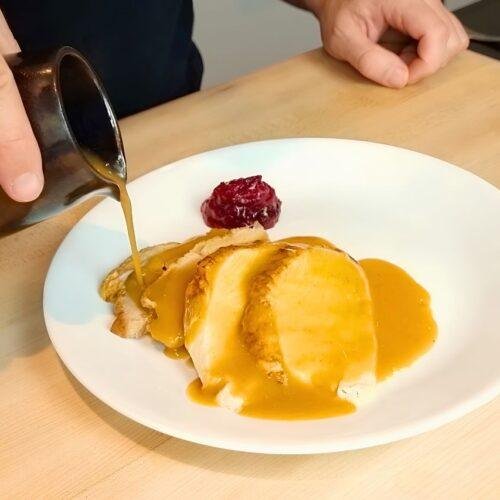
Carefully pour the gravy through a strainer into a saucepan and really squeeze the vegetables with a spoon to get all of their juices out. Reduce the gravy by half, or until it is as thick as you like. I like mine slightly on the thinner side. Taste for seasoning and serve in a warmed gravy boat or jug.
Tips for the Best Turkey Gravy
- Roast the bones until they are deeply golden brown. Under roasted bones give a pale, weak gravy.
- Lightly salt the bones before roasting to build a strong flavour base.
- Skim the fat from the stock once the pot comes to a boil.
- Squeeze the vegetables in the strainer. They are packed full of flavour.
- Stop reducing a little thinner than you want. The gravy thickens quite a lot once it cools slightly on the plate.
Turkey Gravy Recipe: Make-Ahead From Roasted Bones
Equipment
- Large pot / Stockpot or a large saucepan
- Lid oven-safe
- Baking / Roasting tray
- Wooden / Stirring spoon
- Slotted spoon / Spider
- Fine-mesh strainer / Chinois or a sieve
- Saucepan small
Ingredients
- 2 kg turkey bones and trim leg bones, trim and scraps from the leg meat, wings, rear part of the carcass, wishbone and neck
- 4 litres water 4 litres in total, including the water used to deglaze the roasting tray
- 2 white onions from the trivet under the roasting turkey
- 3 carrots from the trivet under the roasting turkey
- 2 celery sticks from the trivet under the roasting turkey
- 2 stalks rosemary from the trivet under the roasting turkey
- 2 handfuls thyme from the trivet under the roasting turkey
- 2-3 dessert spoons plain flour heaped, or all-purpose flour
- 250 ml white wine red wine also works
- salt to taste
Instructions
- Preheat the oven to 220°C (430°F). Lightly salt the turkey bones and trim to start building a strong flavour base.
- Roast the bones for at least 1 hour, flipping and rotating them a few times, until they are deeply golden brown and smell delicious. Roast them hard, because this is where the colour and depth of flavour come from.
- Load the roasted bones into a large stock pot and cover with cold water. Place the pot on a high heat and bring it to a boil.
- Drain all of the fat from the roasting tray and save it for roast potatoes.
- Place the tray on a low heat, pour in enough water to cover it and scrape up all the fond with a wooden spoon. Add this to the stock pot. You need 4 litres of water in total.
- Once the pot is boiling, skim off any fat that comes to the surface.
- Put an oven-safe lid on the pot and cook in the oven at 110°C (230°F) for around 8 hours, or overnight. The minimum is around 4 hours. A pressure cooker or a pan simmering on the stove also works.
- Scoop out the big bits with a slotted spoon, then pour the stock through a fine mesh strainer. Leave it to cool, then chill in the fridge until you need it. It will be gelatinous once chilled.
- On the day, once the turkey is out of the oven and resting, place the roasting tray with the vegetables and juices on a low heat. Deglaze it with a wooden spoon, moving the tray around so it heats in different parts.
- Once most of the liquid has evaporated and the vegetables sound like they are starting to fry, add the flour. Fry it gently, stirring, for 2 minutes to form a roux.
- Add the white wine and stir until there are no lumps remaining.
- Add all of the turkey stock (around 2 litres) and bring the gravy up to a simmer, stirring occasionally. Simmer for 10 minutes to extract the flavour from the vegetables.
- Carefully pour the gravy through a strainer into a saucepan, squeezing the vegetables with a spoon to get all of the juices out.
- Reduce the gravy by half, or until it is as thick as you like. It will thicken quite a lot once it cools slightly on the plate.
- Taste for seasoning and serve in a warmed gravy boat or jug.
Video
Nutrition
Nutrition Facts
| Total Fat | 0.4g |
| Saturated Fat | 0g |
| Cholesterol | 3.3mg |
| Sodium | 619.4mg |
| Total Carbohydrate | 1.9g |
| Dietary Fiber | 0g |
| Sugars | 0.9g |
| Protein | 1.2g |
| Potassium | 45.6mg |
Make-Ahead and Storage
The stock and all of the prep can be done well ahead of time. Once the stock has cooled, chill it in the fridge until you need it. In my case that was three days later, on Christmas Day, when I finished the gravy in the roasting tray.
Frequently Asked Questions
How do I make my turkey gravy thicker?
Reduce the gravy until it is as thick as you like. I reduce mine by half after straining it. The roux does the rest: flour fried for 2 minutes with the vegetables in the roasting tray. Stop a little thinner than you want, because the gravy thickens quite a lot once it cools slightly on the plate.
How much flour should I use for gravy?
For this turkey gravy I use 2 to 3 heaped dessert spoons of plain or all-purpose flour. That is for around 2 litres of turkey stock and 250 ml of white wine. Fry the flour gently with the vegetables for 2 minutes before the wine goes in.
What do chefs use to thicken gravy?
For this gravy I use a roux. The flour is fried for 2 minutes with the vegetables from the roasting tray, then the wine and stock go in and the gravy is reduced by half, or until it is as thick as you like.
What can I add to turkey gravy to make it taste better?
Most of the flavour comes from the bones and the roasting tray. Roast the bones until they are deeply golden brown, lightly salt them, add the fond and the vegetables from the tray, and squeeze the vegetables when you strain the gravy. A glass of white wine goes in with the roux, and you can use red wine instead.